
2010 January 25 GLOBE
& MAIL Essay
My grand jete days are over
Odette seamlessly pirouettes into
arabesque and my muscles grow tense in vicarious appreciation. All eyes
are now focused on centre stage. Although she is surrounded by 18 other
ballerinas waiting in pose, she dances alone.
Tchaikovsky’s Swan Lake swells to its climax and Odette takes
a final pose. She curtsies and gracefully exits stage right as the
audience applauds with vigour.
At that very moment, Odette epitomizes the dream of a million young
dancers, a dream that also filled my aspirations so fiercely it sometimes
hurt.
I don’t remember my first dance class. To be honest, I don’t
remember ever asking my parents to sign me up. According to my mother, my
desire for a life of dance was implied in my preference for skipping
rather than walking, and in my signature one-leg balancing act on my high
chair – a trick that would immediately send my grandmother into a
shrieking conniption as my mother calmly washed dishes
Soon my spinning began. After these sessions resulted in broken glasses
and bruised knees, my parents thought training might be necessary, at
least in the name of safety.
By 3, I was fitted for my first ballet slippers, a process I would
repeat dozens of times over the next 15 years, worn pair after worn pair.
(A typical principal dancer will go through two or three pairs of pointe shoes
in one performance.)
My feet would end up being my most stubborn attribute, so stubborn that
one ballet teacher recommended I wedge them under a piano until my toes
curled to touch the floor to help improve my foot’s flexibility. I did
this exercise for hours every night after dance class, sitting on the
floor and wedging my feet in the few inches of space under the upright
piano while working on homework laid out beside me. My mother would track
my progress in millimetres.
Eventually, my feet were strong enough
for pointe shoes. The first fitting left me excitedly clomping around my
house in the hard-toed slippers, but the thrill soon passed once I entered
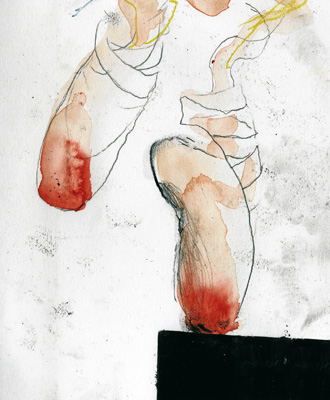
the world of hammer toes, bunions and blood-stained lambs’ wool padding.
As the years went on, classes became
more competitive and peer cattiness increased. Demands to lose weight were
normal, as were the eating disorders that left change rooms smelling of
vomit.
As my non-dancer friends hung out after
school and went to tennis lessons, I was whisked off to ballet. I remember
the initial enthusiasm of going to dance class transformed into dread in
later years. It wasn’t uncommon to be screamed at in Russian for not
jumping high enough. Classes often left us beat down and tired as we
waited for rides in the darkness outside the school.
The graceful leap of a ballerina can
seem so effortless, so natural. While many dancers have inherent rhythm
and flexible limbs, the technique of a ballerina comes only with years of
intense training, blistered feet and, often, a bruised self-esteem.
Everyone wants to be a principal company dancer, but most trained
ballerinas will never grow up to be Odette in Swan Lake or even one
of the 18 accompanying ballerinas posing on the sidelines.
In my late teens, I realized that
perhaps my feeling of dread before class meant something. As I watched a
friend shriek in excruciating arthritic pain backstage, I knew that her
physical ailment would stop her from following her dream. Later that day,
I reviewed my own unhappiness and desire to be anywhere but dance class.
For many of us, we were missing one ingredient for professional success.
My friend didn’t have the joints to continue, and I didn’t have the
heart.
So at 18, I quit dance completely. I
wouldn’t be happy struggling to be a ballerina, but I might be happy
struggling to do something else. I used to cringe with guilt at the
thought of my parents’ wasted money and time spent ushering me to
classes, physiotherapy appointments and costume fittings. But my parents
supported my decision, and I see the benefits of all those years of
commitment in my dedication to achievement.
I used to feel that I was missing out
on playground mischief. Now I wouldn’t trade the trips to Europe or
dancing in the National Ballet of Canada’s production of The
Nutcracker for anything. I performed at the Art Gallery of Ontario’s
Degas exhibit just as passionately as I performed in my living room for
relatives at Christmas. Classes may have been filled with dread, but
performing never was.
I still admire Odette’s fluid
movements and I even find myself watching So You Think You Can Dance.
When I see a perfect grand jeté, I feel my legs twitch in vivid
remembrance. Sometimes, when I’m really happy, I’ll double pirouette
into arabesque. My pain tolerance is so high that blisters never faze me,
and if it counts for anything, I’m still my mom’s favourite dancer.
My toes may be slightly hammered, but
at least they’re blissfully free from the crushing weight of a piano.
- by Julia Eskins GLOBE
& MAIL