PROPERTY


COUNTRY FACTS
FINANCIAL TIMES
BBC
THE TIMES
LONDON TELEGRAPH
UK GOVERNMENT
LAND REGISTRY  
CHARTERED SURVEYOR
PROPERTY NEWS
MAPS

INTERNATIONAL HOLIDAYS

CURRENCY CONVERTER

WORLD TIME ZONES

METRIC CONVERSION


OVERVIEW

Demand for London offices tumbles

The number of cranes adorning the London skyline has fallen by a fifth in just six months as the financial downturn chokes off corporate demand for newly built office space.

Developments under way have fallen by more than half in a year, from 46 in the third quarter last year to just 17 in the past three months. But a report on Thursday warns that London is still facing a huge oversupply of empty office space in the next few years

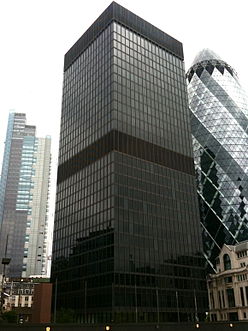
Despite the slowdown in new starts this year, more than 12m sq ft of office space is still under construction, according to the Crane Survey from property consultancy Drivers Jonas out next week, equivalent to about 25 new blocks the size of Swiss Re’s “Gherkin” tower in the City of London.

There is already about 15m sq ft of office space lying empty in central London, and vacancy rates in parts of the capital such as the City are set to rocket as banks and other financial institutions look to reduce staff and freeze relocation plans.

In the Square Mile alone there is 5.6m sq ft of space under construction without a waiting tenant, and the majority of this will be completed in 2009. The larger speculative schemes include Minerva’s Walbrook development, the Heron tower in Bishopsgate and British Land’s Ropemaker Place.

The impact of the global credit crisis on the financial services sector means rents in the City of London are already tumbling – they have fallen to about £57 per sq ft from a peak of £65 per sq ft last summer.

Given the additional problem of an increase in so-called grey space – where banks and other occupiers attempt quietly to sublet their own properties as staff numbers fall – some agents predict rents could slip nearer £40 per sq ft before the end of the economic downturn.

Drivers Jonas said it did not expect any significant new starts “for some time” in the City. The report also warns that other markets across London will not escape the downturn as economic conditions and the fallout from the financial crisis weighs on take-up of office space during the next 12 to 18 months.

The West End is the only area to record an increase in new starts, up from six to nine in the past six months. While at less risk of overdevelopment, the report warns Mayfair’s reliance on hedge funds means rents will fall from record levels as this source of demand dries up. Other markets such as Canary Wharf, the Southbank and King’s Cross have seen no new commercial building in the past six months. Canary Wharf, however, could still be “caught out by its Achilles’ heel – a heavy reliance on the American financial sector”, according to the report.

“The demise of two of its key tenants, Bear Stearns and Lehmans, could put a huge amount of top quality space on to the market,” it warns.

Anthony Duggan, partner at Drivers Jonas, said: “The short-term outlook is one of oversupply with a consider-able volume of speculative space being delivered into the market over the next 15 to 18 months at a time of weak demand. However, the report clearly shows that new development starts in London have come to a grinding halt.”

The report says is developers are walking away from new projects, indicating they have a more realistic grasp of the level of demand in a downturn.  - 2008 November 5   FINANCIAL TIMES

U.K. Property Firms Retrench

Commercial-property companies in the United Kingdom are selling assets and putting developments on hold as credit is virtually unobtainable and layoffs across the financial sector and related industries are curtailing demand.

Two of the country's biggest commercial developers and landlords, Land Securities PLC and British Land PLC, have between them offloaded almost £5 billion ($8.68 billion) in assets during the last fiscal year. And they aren't alone.

U.K.'s real-estate giants have been selling properties to reduce debt and position themselves for further market declines. New commercial-property developments -- once constructed with confidence in a quick lease -- are also rare as businesses fail to secure financing.

"Headlines will be negative for some months to come," said British Land's departing chief executive, Stephen Hester.

Industry specialists warned that after 2010, developers will break ground on only a handful of major developments, because even if the funding environment improves in 2009, finance for speculative developments will remain hard to obtain. Speculative development swells when commercial real-estate markets are booming -- and declines offer a gauge of market health.

London-based real-estate investment consultants at Jones Lang LaSalle predict that speculative office space delivered to the market will fall to about 2.66 million square feet in 2009 from around three million square feet in 2008. By 2010, the amount delivered will shrink nearly 50% to 1.52 million square feet. By the end of 2009, Land Securities' London developments will total a tenth of those completed during 2007, according to the firm.

British Land, which last quarter sold its Willis Building for £400 million, among other sales, also announced cutbacks in development going forward as job losses in the City of London are no longer restricted to the banking sector but include lawyers and other professionals.

Jobs cuts are boosting vacancy rates and shrinking rents throughout London. London rents have fallen 15% in the City and the West End since 2007 as vacancies force landlords to increase incentives for tenants. Only 1.9 million square feet was leased across London in 100 deals in the third quarter, the lowest level since 2004.

Analysts predict rents will fall an additional 10%, reaching as low as £40 to £45 a square foot during the next 12 to 18 months. This will further curtail supply of property in the short term as it will discourage developers from breaking ground on projects.

Vacancy rates are soaring -- they have risen to 8.8% from 4.2% in 2007. But landlords hope that with few new projects in the works, vacancy rates will fall to about 8% in 2010 or so, driving rents up and expanding yields for commercial-property companies.

"It is important to remember that we are in the down part of a cycle and the actions being taken in these gloomy times ... will in fact sow the seeds of recovery," Mr. Hester said.    - 2008 October 15    WALL ST JOURNAL

Multiple Economic Troubles

The U.K. economy may be slowing even more rapidly than expected, with retail sales growing at their slowest pace in at least 25 years and house prices falling more sharply than at any time since 1990.

Tumbling house prices, slowing wages growth and widespread concerns about job security are taking their toll on consumer spending, the driving force behind the 16-year run of economic growth that ended in the second quarter.

The weak outlook for consumer demand suggests that the Bank of England has few reasons to fear a second round of price increases in response to the earlier surge in oil and food prices, which are now falling. Many economists now expect the central bank to cut its key interest rate before the end of this year.

The Confederation of British Industry said Thursday that its main indicator of retail sales volume plunged in August to its weakest level in a quarter century, as poor weather exacerbated the impact of the credit crunch, higher inflation and weak consumer confidence.

According to the business lobby group's Distributive Trades Survey, 60% of respondents said sales in the first half of August were lower than a year ago and 13% said they were up. That dragged the sales volume balance to negative 46 from negative 36 in July, the lowest level since the survey began in 1983.

Sales are unlikely to pick up soon, although consumer confidence did improve slightly in August. Polling organization GfK NOP said the headline measure of sentiment was negative 36 compared with negative 39 in July, an unexpected increase.

That is likely to prove a short-lived bounce, boosted by the U.K.'s largest Olympics-medals haul since 1908.

"This improvement could be down to a number of recent factors, which are mostly of short-term influence, such as cheaper petrol offers, summer holidays happening or just a general feeling of 'things can't get any worse, can they?'" said Rachael Joy, from GfK NOP's consumer confidence team.

The Nationwide Building Society said the price of a typical house fell 1.9% from July and 10.5% from the August a year earlier, marking the biggest annual decline since the fourth quarter of 1990.

Fionnuala Earley, Nationwide's chief economist, said that although she expects the Bank of England to reduce interest rates, it would have little impact on the mortgage and housing markets as long as confidence in the economy remains weak.

A poll commissioned by the Trade Union Congress -- which represents U.K. labor unions -- showed that 13% of the work force, aren't confident they will still be in their job in a year.  - 2008 August 29   WALL ST. JOURNAL

London named top literary destination

London has been named as the world's top destination for tourists looking for a taste of literature, beating Paris, New York and Rome in a top 10 compiled by a travel website.

The birthplace of writers such as Charles Dickens and John Keats and the setting for countless novels, London was described as 'the home of literature we have spent so much time learning and loving'.

In second place was Straford-upon-Avon, the picturesque Warwickshire birthplace of Shakespeare and home to the Royal Shakespeare Company.

Edinburgh came third thanks to its mix of historic and contemporary writers. It was home to Sherlock Holmes creator Arthur Conan Doyle, Treasure Island creator Robert Louis Stevenson and Walter Scott, who wrote Ivanhoe.

Authors Ian Rankin, Alexander McCall Smith and Harry Potter creator JK Rowling are all based in the city.

'Bookworms will enjoy delving into these destinations,' said TripAdvisor spokeswoman Michele Perry.  - 2008 August 15   REUTERS

Westfield bullish on London malls

Despite the U.K.'s sluggish economy and a looming recession, the Westfield Group is taking an optimistic view of London retail. Westfield London, a 1.6 million-square-foot center in west London slated to open on Oct. 30, is already 96 percent let, while a  1.9-million-square-foot center next to the Olympic Park in east London's long-rundown Stratford area is slated for completion in 2011.  - Bloomberg    September 2, 2008

UK property brokers fear bank-style jobs cull  
Rumours that big players plan 5,000 redundancies as demand tanks, but some analysts dispute that figure

With much of the European real estate market on its knees, the painful death of job security is now haunting property brokers as well as investment bankers.

High-flying real estate dealers are leaving their favourite tables at expensive London restaurants vacant, awaiting a purge that will have much in common with the one that has rocked Britain's banking sector this year.

Property booms fed and were fed by the global credit boom that ended abruptly last year when US mortgage defaults began to mount, and investment demand in the UK and US property markets has crumbled in the credit crunch that followed. Now other European markets are wilting fast and job losses may not be confined to those frontline bear markets.

'Property is a cyclical business and contraction will be inevitable as firms look to be more streamlined,' warned British Property Federation chief executive Liz Peace.

Rumours abound that some of the biggest employers in real estate are bracing for a phase of redundancies which could cost up to 5,000 property professionals their jobs across their European, Middle Eastern and African (EMEA) operations.

Not everyone agrees headcounts are under such strain.

'Markets like Eastern Europe, Russia, Ukraine, Turkey are still growing, so it would be ludicrous to downsize European businesses anywhere near that figure,' said Paul Bacon at property consultant Cushman & Wakefield, referring to the rumours of 5,000 job losses.

'We have absolutely no plans for wholesale redundancies in the UK,' said Mr Bacon, who is head of EMEA business.

Major emerging markets have so far escaped the worst of the credit crunch. However, the credit boom that preceded it fed foreign investors' appetite for property as well as other assets in emerging markets.

'There are a number of markets where (property) prices have risen very quickly,' said Robert Maciejko, managing director for Central and Eastern Europe at global management consultancy Oliver Wyman. 'The issue is when the Brits or the other foreign investors are no longer investing, or even looking to sell, and that's when prices can really go down.'

According to data from Cushman & Wakefield, European property trading volumes have slumped 63 per cent year-on-year to 25.6 billion euros (S$54.7 billion), leaving many brokers in Spain, Ireland, Germany and France fearing redundancy.

One market analyst, who did not wish to be named, said a flurry of corporate takeovers executed in the twilight of the property cycle had left titans like CB Richard Ellis (CBRE) and Jones Lang LaSalle 'thick around the middle' - with too many support staff playing piggy-back on fewer high fee-earning brokers.

'We have grown market share considerably in recent years, partly due to organic growth and partly through acquisitions,' said Alastair Hughes, head of EMEA at Jones Lang LaSalle (JLL). 'These acquisitions were either to expand our geographic coverage or to strengthen existing business areas. None were predicated on a continued capital markets boom.'

Figures posted last week showed sinking second-quarter profits at both firms but overall revenues in JLL's EMEA division were 20 per cent higher than the corresponding period in 2007 as the firm racked up lower- margin advisory business to offset an abrupt halt in building sales.

'Property services firms are all having to adapt to more difficult market conditions,' said Mr Hughes, who described the rumoured threat of 5,000 job cuts as excessive. 'The industry will have to manage costs accordingly because it is unlikely that the capital markets will recover in 2009, and likely that the leasing markets will continue to soften.'

London-listed global consultancy Savills told Reuters it had embarked on a cost-cutting programme that included some redundancies but it would not discuss details.

Mr Bacon said Cushman was still keen to make strategic appointments. 'Our European business has expanded rapidly in the last five years but the quid pro quo was we couldn't grow as fast in the UK. This gives us a chance to address that,' he said.

CBRE, the world's largest property consultancy, said it was 'naturally focused' on cost cuts that would provide 'meaningful bottom-line benefit' and that it had shed a modest number of jobs in business areas hardest hit by the market downswing.

Paul Soothill, head of property and facilities management recruitment at Joslin Rowe, said property firms hoped to redeploy staff to areas like outsourcing, which can help UK corporates to manage their real estate more cost-effectively.

Average UK commercial property values have tanked by almost a fifth since the collapse of Britain's white-hot commercial property market in June 2007.

In the same way Britain starts sniffling when the United States catches a cold, where the UK real estate market goes, many European property markets tend to follow.

'Many of the big firms have been here before,' said the British Property Federation's Ms Peace. They 'know what they need to do to weather the storm'.     - 2008 August 7  REUTERS


London's super-rich
Where do the millions go?

It is rarely a bad time to be rich, but now is better than most, especially in London. Over the past few years the city has become a magnet for the global plutocracy, attracted by lavish nightlife, luxuries of all sorts, easy access to the rest of the world and, most of all, a comparatively benevolent taxman. Russian oligarchs mix with American tycoons and Middle Eastern oil magnates in what Forbes magazine, bible of the global super-rich, described last year as “a magnet for the world's billionaires”.

But a study published on November 5th suggests that not all the news is good. According to Stonehage, a firm of financial advisers to London's multi-millionaires, it is costing the capital's many plutocrats much more to maintain their standard of living than it used to. They reckon that prices of luxury goods and services increased by 6% in the 12 months to July, more than twice the 2.3% rise registered on the official consumer-price index .

Existing government inflation measures do not quite capture the upper-crust experience, Stonehage says. The CPI, for example, ignores many housing costs that rich and poor alike must pay, and the more comprehensive retail-price index excludes the richest 4% of consumers. Stonehage's new Affluent London Living Index is designed to fill the gap.

The details are enough to make an investment banker splutter into his increasingly expensive caviar (the price of which rose 28% over the year). Rents in central London have increased by 25% since 2002. A top-line Range Rover today costs 20% more than last year's model. Fees for day pupils at Westminster (a fancy independent school) are up by 7%, and the price of a case of Lafite Rothschild by an eye-watering 117%. Leisure has grown pricier as well: two days of grouse shooting costs 8% more this season than last and an executive box at Chelsea Football Club, London's most fashionable, has risen by 25%. Robby Hilkowitz, a director of Stonehage, blames a rapid increase in the ranks of the mega-rich for pushing up prices.

Exceptions there are: cars may be getting pricier but chauffeurs are no dearer than they were. Nor are fancy haircuts or membership of gentlemen's clubs. Entry-level private jets are actually 7% cheaper, although high oil prices could make the fuel bills painful. Breast implants for the high-earning woman are down 10%.

Yet rising consumption costs tell only half the tale. Most of the ultra-rich have the bulk of their wealth invested, so they have benefited handsomely from the sustained boom in asset prices. The same central London house that costs 25% more to rent is worth 150% more on the market. And sympathy for the plutocrats' plight may be hard to find among the great hordes of the salaried unwashed (many of whom also live in London), whose real disposable incomes are being squeezed. - 2007 November 8   ECONOMIST

European property investment seen rising 20-25% in H2
(LONDON)
Investment in European commercial real estate is expected to jump 20 to 25 per cent in second half of 2005, after rising 4 per cent to 47.9 billion euros (S$97.7 billion) in the first half of 2005 over the same period of 2004, a survey showed.

'European direct real estate continues to perform well relative to other mainstream investment assets; strong risk-adjusted performance and positive yield gaps have encouraged investors throughout Europe,' , chief executive of European capital markets at property consultants Jones Lang LaSalle, said on Tuesday.

'We expect investment volumes in the second half of 2005 to reflect the same 20 per cent to 25 per cent uplift on the first half of the year that was recorded in 2004. This will drive total volumes for 2005 to well over 100 billion euros.'

European cross-border real estate investment totalled 24 billion euros in the first half of 2005, or about 50 per cent of total activity, and was 27 per cent higher than in the same period of last year.

The greatest gains in cross-border investment market share have been seen in Sweden and Central and Eastern Europe since 2000. 'In the past 18 months we have begun to see an increase in the volume of sales by cross-border investors seeking to take advantage of recent yield compression, the opportunity to crystallise profits,'  head of European research at Jones Lang LaSalle said.

Property yields (rent as a proportion of capital value) move in the opposite direction to prices, and have been falling across Europe as a wall of investment money seeks out strong real estate returns. - Reuters    11 Apr 2005

UK house prices, which have tripled in the past decade, are already showing signs of falling. Values dropped for a second month in October, the first back-to-back decline since May 2005, mortgage lender HBOS Plc said last week.

Higher prices have made it harder for investors to profit from letting out their properties.

Rental yields on houses and apartments are now about 5 per cent, says Citigroup, which compares with the 6.37 per cent average rate offered by lenders this month on a two-year mortgage for 95 per cent of the property price. -   2007 November 13    Bloomberg


RESIDENTIAL

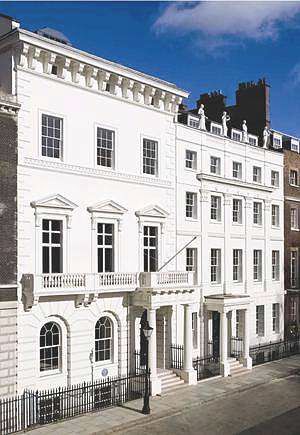
Centrally located properties in London continue to be in high demand though  with Asian investors concentrating acquistion of new properties during the past seven years.  Britons, on the other hand pre prefer period properties, particularly Victorian and Georgian. 

House prices are set to rise by more than 20% a year, City analysts suggested at the weekend. A leading investment bank believes a leap in London house prices this summer will trigger similar increases across the country.

A surge in demand for London properties and a lack of homes for sale will push prices in the capital sharply higher, according to Danny Gabay, UK economist for JP Morgan. This will fuel house price inflation nationally, he said.

Until recently the London property market has acted as a brake on the rapid rise in house prices elsewhere. Over the past year, the cost of homes in London has barely increased. Demand in the capital was hit by the September 11 terrorist attacks and the knock-on slide in the stock market.

But the latest survey from the Royal Institute of Chartered Surveyors reveals a sudden jump in inquiries from househunters. Its measure of estate agents reporting a rise in buyers rose from just 3% in April last year to 40% this April.

Gabay believes a steep increase in demand for London homes will send property values soaring in the capital. 'There is too much money chasing to few homes,' he said. 'No supply and a surge in demand is a lethal cocktail for inflation.'

The warning comes as house prices rose by 4.2% in May, the biggest monthly rise since records began in 1983. The previous high was 4.1% in July 1988, just weeks before the market went bust.

According to figures from the Halifax this month, the average cost of a home rose from £102,808 to £107,152 in just four weeks. The leap takes annual house price inflation to 18.5%.

Some observers fear the property market could be heading for another spectacular collapse. The latest figures are good news for homeowners but will add to the gloom of first-time buyers. They also mean it will be even harder for key workers such as nurses and firefighters to afford homes in London and the South East.

Meanwhile, as the property market soars an investigation has been ordered into dubious practices among estate agents. The inquiry, into profiteering and corruption, will be conducted by the Office of Fair Trading. Prompted by a record number of complaints, the investigation is likely to examine gazumping, a legal but widely despised ruse in which a house seller in a rising market increases the asking price after acquiring a buyer. Estate agents usually act as middle men in gazumping and profit from the higher prices. - by James Orr        Daily Mail       10 June 2002

Singaporean viewpoint on London Real Estate

Singaporeans may find it more opportune to cash in on existing London properties than to buy one at this time, considering that the pound sterling has strengthened against the Sing dollar since early last year and capital values have rocketed in the past decade before last year's relatively slight fall.   The racing London property market is  definitely easing, according to the latest research by agents FPDSavills in the United Kingdom.

At 8.5 per cent, growth was rapid in the first quarter as buyers raced to beat the March budget announcement of an increase in stamp duty, and the rate eased back to 2 per cent for the second quarter, said Yolande Barnes, UK director of research for FPDSavills.

For the whole of this year, the January forecast of 13.5 per cent for prime residential still held, giving rises of just one per cent for each of the remaining quarters. And the future looks steady and stable.

"It would take an external economic shock to shake demand sufficiently to precipitate the forced sales and widespread reductions in values across the market," Ms Barnes said. While this could not be ruled out, economic indicators looked good and inflation was low. Most at risk of a sharp correction are properties in non-prime locations or on the fringes of "emerging" areas.

"We are seeing valuations falling, for example, where people cannot afford Islington and buy on the edge of Hackney instead, or they really want Hackney but settle for neighbouring Hoxton," Ms Barnes said.

"These fringe areas have been pushed up too far, too quickly."

As usual, prime locations hold up best in a slack market but London is huge and every area is driven by local factors.

For example, prices in Mayfair, always popular with international buyers, range from £600 (about HK$6,969) per square foot for a quality refurbishment, and £700 for a newly built apartment, increasing to £1,000 per square ft around Park Lane.

Not far away in newly trendy Marleybone High Street, a different dynamic is evident. Since the Jubilee Line extension made it an easy commute to Canary Wharf, bankers and financiers have moved in. You can buy at £450 to £550 per square ft within minutes of Baker Street tube station and, with the likelihood of big bonuses later this year for property and financial sectors in the square mile, this area could shoot up.

Over time London property has proved a good bet. Anyone who bought there eight years ago - and many Asian buyers did - will be happy. They are sitting on gains of 152 per cent. The best of those years was last year, where falling interest rates and improved market sentiment drove prime residential prices up 24 per cent, according to FPDSavills.

At the top end, Ms Barnes said, there had been a subtle shift in the amount of available supply. Since the frenetic activity had eased, "discretionary selling" - where owner-occupiers who do not have to sell test the water - was happening.

If they did not make a killing, they would simply take their place off the market. But if they did sell, they in turn would become buyers.

These had replaced the buy-to-let brigade of the last few years. Demand had fallen in the investment market.

"Reduced capital growth prospects and falling yields are discouraging new private investors," Ms Barnes said. "The effects of this are likely to be felt most strongly in the new development market where marketing strategies are focused on attracting investment buyers in the early stages of the sales process," she added. So look hard beyond the hype and haggle at those Hong Kong exhibitions of off-the-plan London developments.

"It has shifted from a buyer's to a seller's market," she added.

Hong Kong-based UK property sourcer and manager for SAR clients Chris Moscrop has just returned from London. He found sensibly priced property in prime locations was still selling well, but said anything second-rate or over-priced was sticking.

"But I do not see this pause as a problem; the market had to slow down some time before it went over the cliff," he said.

He expected any drop in interest rates would kick-start the market once more, but advised anyone who had not yet bought in London, and who felt they had missed the boat, to delay their purchase a bit. Be cool, be prepared to make offers and walk away if necessary, he advised.

The lull in sales was good news for existing Hong Kong investors in top-end London property, because rentals had improved. Returns had dwindled on houses to an average net yield of 3.8 per cent for the second quarter of this year - 6.8 per cent gross. Flats fared slightly better, returning 4.3 per cent net, equal to 7.1 per cent gross.

Having been static since 1998, rental yields have made a 6 per cent leap during the first half of this year alone.

FPDSavill's 11 per cent growth prediction for this year looks a little bullish, considering many London agents are actually advising their landlords to hold rents steady to keep good tenants, or attract new ones.

Nevertheless, FPDSavills said rents had bottomed out and would reach 4 per cent net in the fourth quarter.

None of this would deter Hong Kong investors, insisted Linda Robinson, executive director of international property for Colliers Jardine. They look at the combination of yields and capital growth, and know that if the sales market slackens, the rental market improves.

Asian buyers in search of a prestige property should look at SW1 addresses - Knightsbridge, Chelsea, and along the Embankment, Ms Robinson said. Predictable advice, since Colliers Jardine will unleash units in Nine Albert Embankment Road on to the SAR market, through an off-the-plan exhibition next month. Prices will be £195,000 to £1.5 million, and units range from 500 sq ft to 2,500 sq ft, in what used to be the old British Steel building.

Those flats overlooking the murky River Thames will command a premium. Waterfront property, always first choice for Hong Kong buyers, generally costs 25 per cent extra in London.   - by Anna Healy Fenton  South China Morning Post    Sunday, August 20, 2000

Property rush gathers pace

The London housing market is roaring toward one of its busiest weekends ever as a number of crucial market drivers coincide, fuelling the raging debate about whether the market is about to boil over.

The peak spring buying season, a flood of bonus money from a revived City, a new wave of wealthy foreign buyers, and a rush to lock in before further rises in interest rates have propelled demand toward record levels.

Despite recent analysts' forecasts of a potential 40% crash in prices, some estate agents say buyer numbers have risen fourfold from this time last year in a market with fewer houses for sale, and there are signs that prices are accelerating strongly.

Charles Peerless, Winkworth head of West End, Chelsea and Knightsbridge, said: 'The big difference is properties from £450,000 to £800,000, which are selling dramatically and weren't moving a year ago. We have examples of sealed bids and frustrated purchasers.'

House prices in the capital are thought to be about 9% higher than 12 months ago, more than making up for a setback during the first half of last year, and prompting concerns among some City forecasters that the market is about to overheat.

Winkworth says that house prices have risen 3.78% since the start of the year, the largest quarterly increase since January 2002, and there is little evidence that the Bank of England's recent increase in its base lending rate to 4% has deterred buyers. In fact, some are being encouraged into the market now, fearing that further rises in rates and pricier mortgages lie ahead.

James Bailey of Douglas & Gordon said: 'I have never known an Easter period like it. I even received three calls on my mobile on the Easter Sunday from sellers confirming that they wished to go ahead.'

Lane Fox director Lulu Egerton said: 'This year City bonuses are back and potential buyers have been sussing out the market since January on the back of their bonus prediction.'

Foreign buyers, led by an influx of Russian money, are also back in force, resurrecting last year's 'dead' market for multi-million pound homes, according to FPD Savills head of residential Rupert Sebag-Montefiore.

Super rich are the drivers

THIS month's record London house deal in which Indian billionaire and New Labour donor Lakshmi Mittal shelled out £70m for Formula One promoter Bernie Ecclestone's Kensington Palace Gardens mansion has had a galvanising effect at the highest levels of the capital's property scene.

With a £27m deal in Chelsea breaking the UK record for a flat this month, there has been an increase in the numbers of deep-pocketed buyers in the market. They include Russian, Irish and Asian interests and a new wave of City super-rich.

Agents report a pick-up in the number of hedge fund managers buying in the £7m-to-£15m range in Mayfair and Holland Park.  - By Mira Bar-Hillel,   Evening Standard     16 Apr 2004

Top ten UK hotspots

TOWN
PRICE
CHANGE ON
ONE YEAR
Hartlepool
£109,068
+59%
Darlington
£128,936
+58%
Swansea
£138,744
+55%
Blackburn
£101,409
+51%
Newark
£183,419
+48%
Stockton-on-Tees
£122,186
+44%
Pontefract
£133,356
+43%
Rotherham
£104,832
+41%
Chesterfield
£120,217
+40%
South Shields
£107,448
+40%
London
£239,552
+9.1%
UK
£147,785
+18.5%
This Is Money   16 Apr 2004

London prices edge up again

Fresh evidence that Britain's housing market is past its peak emerged today, although property prices in London are nudging up again following recent falls.

The latest report from Rightmove, Britain's biggest property website, shows the average asking price of a home rose by 2% in February - traditionally a busy month for house buying. But the annual rate of increase slipped from 26.5% in January to 23.5% because of a much bigger increase (4.5%) in February last year.

In London, asking prices rose 1.2% on average in February. Over the past four months, pricier central boroughs have enjoyed a strong recovery after suffering significant price falls in the autumn. Kensington and Chelsea prices have surged by 10.3%, while in the City of Westminster they are up 4%.

The report also suggests this month's interest rate cut has boosted sales activity. A record number visited Rightmove's site on the Monday after the reduction. Shipside said: 'Though the cut has not been fully matched by most of the main mortgage lenders, it may have given buyers more confidence that interest rates and mortgage repayments will remain low.'   -  By   Jane Padgham, Evening Standard   26 Feb 2004

  source:  Propety Mall.com

Centrally located properties in London continue to be in high demand though  with Asian investors concentrating acquisition of new properties during the past seven years.  Britons, on the other hand pre prefer period properties, particularly Victorian and Georgian. 

House prices are set to rise by more than 20% a year, City analysts suggested at the weekend. A leading investment bank believes a leap in London house prices this summer will trigger similar increases across the country.

A surge in demand for London properties and a lack of homes for sale will push prices in the capital sharply higher, according to Danny Gabay, UK economist for JP Morgan. This will fuel house price inflation nationally, he said.

Until recently the London property market has acted as a brake on the rapid rise in house prices elsewhere. Over the past year, the cost of homes in London has barely increased. Demand in the capital was hit by the September 11 terrorist attacks and the knock-on slide in the stock market.

But the latest survey from the Royal Institute of Chartered Surveyors reveals a sudden jump in inquiries from househunters. Its measure of estate agents reporting a rise in buyers rose from just 3% in April last year to 40% this April.

Gabay believes a steep increase in demand for London homes will send property values soaring in the capital. 'There is too much money chasing to few homes,' he said. 'No supply and a surge in demand is a lethal cocktail for inflation.'

The warning comes as house prices rose by 4.2% in May, the biggest monthly rise since records began in 1983. The previous high was 4.1% in July 1988, just weeks before the market went bust.

According to figures from the Halifax this month, the average cost of a home rose from £102,808 to £107,152 in just four weeks. The leap takes annual house price inflation to 18.5%.

Some observers fear the property market could be heading for another spectacular collapse. The latest figures are good news for homeowners but will add to the gloom of first-time buyers. They also mean it will be even harder for key workers such as nurses and firefighters to afford homes in London and the South East.

Meanwhile, as the property market soars an investigation has been ordered into dubious practices among estate agents. The inquiry, into profiteering and corruption, will be conducted by the Office of Fair Trading. Prompted by a record number of complaints, the investigation is likely to examine gazumping, a legal but widely despised ruse in which a house seller in a rising market increases the asking price after acquiring a buyer. Estate agents usually act as middle men in gazumping and profit from the higher prices. - by James Orr        Daily Mail       10 June 2002


The racing London property market is  definitely easing, according to the latest research by agents FPDSavills in the United Kingdom.

At 8.5 per cent, growth was rapid in the first quarter as buyers raced to beat the March budget announcement of an increase in stamp duty, and the rate eased back to 2 per cent for the second quarter, said Yolande Barnes, UK director of research for FPDSavills.

For the whole of this year, the January forecast of 13.5 per cent for prime residential still held, giving rises of just one per cent for each of the remaining quarters. And the future looks steady and stable.

"It would take an external economic shock to shake demand sufficiently to precipitate the forced sales and widespread reductions in values across the market," Ms Barnes said. While this could not be ruled out, economic indicators looked good and inflation was low. Most at risk of a sharp correction are properties in non-prime locations or on the fringes of "emerging" areas.

"We are seeing valuations falling, for example, where people cannot afford Islington and buy on the edge of Hackney instead, or they really want Hackney but settle for neighbouring Hoxton," Ms Barnes said.

"These fringe areas have been pushed up too far, too quickly."

As usual, prime locations hold up best in a slack market but London is huge and every area is driven by local factors.

For example, prices in Mayfair, always popular with international buyers, range from £600 (about HK$6,969) per square foot for a quality refurbishment, and £700 for a newly built apartment, increasing to £1,000 per square ft around Park Lane.

Not far away in newly trendy Marleybone High Street, a different dynamic is evident. Since the Jubilee Line extension made it an easy commute to Canary Wharf, bankers and financiers have moved in. You can buy at £450 to £550 per square ft within minutes of Baker Street tube station and, with the likelihood of big bonuses later this year for property and financial sectors in the square mile, this area could shoot up.

Over time London property has proved a good bet. Anyone who bought there eight years ago - and many Asian buyers did - will be happy. They are sitting on gains of 152 per cent. The best of those years was last year, where falling interest rates and improved market sentiment drove prime residential prices up 24 per cent, according to FPDSavills.

At the top end, Ms Barnes said, there had been a subtle shift in the amount of available supply. Since the frenetic activity had eased, "discretionary selling" - where owner-occupiers who do not have to sell test the water - was happening.

If they did not make a killing, they would simply take their place off the market. But if they did sell, they in turn would become buyers.

These had replaced the buy-to-let brigade of the last few years. Demand had fallen in the investment market.

"Reduced capital growth prospects and falling yields are discouraging new private investors," Ms Barnes said. "The effects of this are likely to be felt most strongly in the new development market where marketing strategies are focused on attracting investment buyers in the early stages of the sales process," she added. So look hard beyond the hype and haggle at those Hong Kong exhibitions of off-the-plan London developments.

"It has shifted from a buyer's to a seller's market," she added.

Hong Kong-based UK property sourcer and manager for SAR clients Chris Moscrop has just returned from London. He found sensibly priced property in prime locations was still selling well, but said anything second-rate or over-priced was sticking.

"But I do not see this pause as a problem; the market had to slow down some time before it went over the cliff," he said.

He expected any drop in interest rates would kick-start the market once more, but advised anyone who had not yet bought in London, and who felt they had missed the boat, to delay their purchase a bit. Be cool, be prepared to make offers and walk away if necessary, he advised.

The lull in sales was good news for existing Hong Kong investors in top-end London property, because rentals had improved. Returns had dwindled on houses to an average net yield of 3.8 per cent for the second quarter of this year - 6.8 per cent gross. Flats fared slightly better, returning 4.3 per cent net, equal to 7.1 per cent gross.

Having been static since 1998, rental yields have made a 6 per cent leap during the first half of this year alone.

FPDSavill's 11 per cent growth prediction for this year looks a little bullish, considering many London agents are actually advising their landlords to hold rents steady to keep good tenants, or attract new ones.

Nevertheless, FPDSavills said rents had bottomed out and would reach 4 per cent net in the fourth quarter.

None of this would deter Hong Kong investors, insisted Linda Robinson, executive director of international property for Colliers Jardine. They look at the combination of yields and capital growth, and know that if the sales market slackens, the rental market improves.

Asian buyers in search of a prestige property should look at SW1 addresses - Knightsbridge, Chelsea, and along the Embankment, Ms Robinson said. Predictable advice, since Colliers Jardine will unleash units in Nine Albert Embankment Road on to the SAR market, through an off-the-plan exhibition next month. Prices will be £195,000 to £1.5 million, and units range from 500 sq ft to 2,500 sq ft, in what used to be the old British Steel building.

Those flats overlooking the murky River Thames will command a premium. Waterfront property, always first choice for Hong Kong buyers, generally costs 25 per cent extra in London.  
- by Anna Healy Fenton  South China Morning Post    Sunday, August 20, 2000


Copyright ©  2008
By opening this page you accept our
Privacy and Terms & Conditions