Grosvenor
Group Ltd, the real estate firm owned by the family trust of
Britain's Duke of Westminster, plans to raise 40 billion yen
(S$622.3 million) for a fund to invest in Japanese properties as the
market recovers.
Grosvenor,
with about US$17 billion in assets, plans to invest in office
buildings and apartments in the greater Tokyo area, said Ken
Nakajima, Tokyo-based managing director at Grosvenor Fund Management
Japan Ltd. The new fund will finance about half of the assets with
loans, a ratio that will allow it to buy as much as 100 billion yen
of properties, he said.
Investors
have started to look at Japan again as a recovery is emerging in the
real estate market. Tokyo was ranked the first in real estate
transactions in the past 12 months with US$28 billion, followed by
Shanghai and Singapore, according to data compiled from New
York-based Real Capital Analytics Inc.
'Investors
have started to show interests,' said Mr Nakajima. 'Japan remains
attractive with its stability among its Asian counter parts.'
Shanghai,
the financial centre of China where January home prices fell for
four straight months, said last week that it's maintaining the
city's housing curbs. Singapore, where fourth-quarter housing values
posted the smallest gain in 21/2 years, introduced new taxes in
December aimed at foreign buyers.
In
Japan, the number of sites where land values were unchanged or
increased in the last three months outnumbered spots that fell for
the first time in 31/2 years, helped by recovering demand around the
Tokyo Bay area, according to a land ministry survey on 150 locations
released this month.
Mr
Nakajima declined to elaborate on how much return the fund will
generate as that has not been finalised. London-based
Grosvenor plans to start buying properties as early as September for
the fund, which will have an investment period of five to seven
years, he said.
The
Duke of Westminster, whose name is Gerald Grosvenor, has a net worth
of US$13 billion, according to Forbes magazine.-- 2012 February 28
Bloomberg
Mitsubishi
increases Tokyo Real Estate investment
Japan's
Mitsubishi Estate said yesterday that it plans to sharply increase new
investments in central Tokyo outside its core district of Maruouchi to
about 100 billion yen (S$1.67 billion) over three years as it sees an
improvement in the market.
The
plans are a rare upbeat sign for Japan's property market and
underscore the better position of developers such as Mitsubishi
Estate which, unlike overseas investment funds, can afford to wait
until new buildings begin generating cash flow.
'It's a good time to buy properties for developing office buildings
now because prices have come down to a reasonable level, and at the
same time we are seeing signs that demand for new buildings will
increase in a few years,' executive vice-president Hiroyoshi Ito
said.
Mitsubishi Estate is one of the most active players in Japan's still
stagnant property market, where no major transactions have been seen
since March when Mitsubishi Estate bought an office building complex
from US investment fund Lone Star for about 90 billion yen.
The developer also announced yesterday the sale of a 30-story office
building in Tokyo for 60.8 billion yen to real estate trust Japan
Real Estate Management.
Mitsubishi Estate plans to spend as much as 30 billion yen a year to
buy land for development, while in 2009 and 2010, when the property
market plummeted in the wake of the global financial crisis, the
developer did not spend more than 10 billion yen each year on new
land, Mr Ito said.
This year it targets spending of 25 billion yen for new land and has
already achieved 80 per cent of the target, he said.
'From this year we are gearing up for new investments,' he said.
Tenants increasingly require safer buildings after the March 11
earthquake that devastated coastal areas of north-east Japan, and
that will help increase demand for new buildings, Mr Ito said.
Mitsubishi Estate is in a good position to buy properties now
because some companies are tempted to sell older office buildings to
seek new and safer buildings, Mr Ito said.
It is still hard to buy properties that went under control of
lenders for good prices because there is still a gap between sellers
and buyers, he said.
'Lenders are also expecting the market to improve in the future so
they want to wait to sell properties until then.'
In the Marunouchi district, where it dominates office development,
Mitsubishi Estate says that it plans to spend 300 billion yen over
the three years, the same pace as in previous years.
Mr Ito's focus is on properties in the areas surrounding Marunouchi
such as Tokyo's Chiyoda, Minato and Chuo wards. --
2011 November 15 REUTERS
Demand for
offices, houses likely to increase as interest rates are kept low
Investors should buy shares in
Japanese real estate companies because demand for offices and houses
is likely to increase as the central bank keeps borrowing costs near
zero, said Bank of America Corp's Merrill Lynch & Co.
Bottoming
out: The number of condos offered for sale in the Tokyo
area rose 27.8% in July while office vacancy fell for the
first time since January 2008
Tokyo's office vacancy rate has
fallen for the first time in 21/2 years, demand for housing is
rising and a decline in land values has slowed, making real-estate
more attractive, Merrill Lynch strategist Masatoshi Kikuchi said.
The Bank of Japan, which kept borrowing costs unchanged on Tuesday,
should also help to spur a recovery in real estate, he said.
'We can see now that the decline
in demand for real estate has pretty much bottomed out,' Mr Kikuchi
said. 'Also, because Japan's interest rates will remain low, we
should see a recovery and investors should start buying these
shares.'
The Bank of Japan kept the
benchmark overnight rate at 0.1 per cent, where it has been since
December 2008. The Topix Real Estate Index, measuring 44
property-related stocks, has risen 12 per cent from this year's low
on July 22, compared with the broader Topix's 0.5 per cent decline
during the same period.
Tokyo's office vacancy rate fell
in July for the first time since January 2008, according to an Aug 5
report by Miki Shoji, a privately held office broker. The number of
condominiums offered for sale in Tokyo and surrounding areas rose
27.8 per cent in July from a year earlier, the Real Estate Economic
Research Institute said on Aug 16.
Japan's land values also declined
at fewer sites for a third straight quarter as property companies
started to purchase land amid a recovery in housing demand, the
Ministry of Land, Infrastructure, Transport and Tourism reported Aug
24.
Mr Kikuchi said that Japan's
stock market should recover further next year, with the Topix index
rising to between 9,000 and 12,000 from January to March as the
global economy strengthens. The Topix closed at 820.99 yesterday.
While foreign investors now view
Japan's equities as a minor part of their global portfolios, Japan
should be able to capitalise on Asia's emerging growth and increase
interest in Japanese companies, he said.
Mr Kikuchi spoke at an investment
seminar attended by more than 1,700 people, including 300 foreign
investors. The number of foreigners at the annual conference jumped
from 279 last year, an increase that shows overseas interest in
Japanese equities has risen, Mr Kikuchi said.
Mr Kikuchi was rated Japan's top
strategist in rankings by the Institutional Investor magazine's 2010
survey and came second in the Nikkei Veritas newspaper's Japanese
strategist rankings this year, according to Merrill Lynch.
At a seminar on Jan 13, Mr
Kikuchi said the Nikkei 225 Stock Average would rise to 13,000 from
10,735.03 by about May as a weaker yen bolstered company earnings.
The gauge climbed 5.6 per cent to this year's high of 11,339.3 on
April 5, and then plunged 12 per cent in May.
Mr Kikuchi also said the Nikkei
225 may rise 12 per cent to 8,500 by the end of March 2009 in a note
to clients on Feb 27 last year. The gauge closed at 8,636.33 on Mar
26, 2009, and rose 7.2 per cent that month. -
2010 Sept 9 Bloomberg
Managers across Japan were
stunned last month when a factory belonging to Ogihara, a Japanese
diemaker, was sold to BYD, a Chinese carmaker that boasts Warren
Buffett as an investor. In a sign of the sensitivity of the matter,
the Japanese firm tried to keep the transaction quiet, never issuing
a press release and refusing all interview requests.
Japan has a long history of
resisting foreigners who seek to buy their way into the country. But
most recent squabbles have at least been with firms from America, a
political ally. Deals involving firms from the Chinese mainland are
touchier because of the two countries’ uneasy relations. This has
kept the number of Sino-Japanese mergers and acquisitions low, even
as China surpassed America in 2007 to become Japan’s largest
trading partner.
Yet the volume of deals is now increasing. The number of
purchases of Japanese firms by Chinese ones almost doubled last year
and their value nearly quadrupled, albeit from low bases (see
chart). The deals usually involve small firms with specialist
technology, which sell a stake or a subsidiary rather than the whole
company, typically for a few million dollars.
Chinese firms are not attracted by Japan’s stagnant domestic
market, with its declining population and chronic overcapacity; they
want to acquire technologies, skills and brands that can be brought
back to China or used in other countries, says Heang Chhor, the head
of the Tokyo office of McKinsey, a consultancy. In return, the
Japanese firm may get not only capital and new management ideas, but
also better access to the burgeoning Chinese market.
This is the case with Laox, an atrophying electronics retailer in
which a Chinese franchisee and Suning, a big Chinese appliance
retailer, recently bought a 51% stake. The new owners have revamped
the firm’s Japanese stores to cater to Chinese tourists who flock
to Tokyo to shop, and plan to open 110 Laox outlets in China over
the next three years. By that time they expect sales in China to
surpass those in Japan.
Importantly, the Chinese owners want to learn from Laox. They
want to improve their relations with suppliers and bring Japan’s
famed standards of service to China, says Luo Yiwen, Laox’s new
boss, a Chinese national who has lived in Japan for two decades.
Before the acquisition Laox’s share price had fallen as low as ¥10
($0.11); it now trades at around ¥110.
Many Japanese are uneasy working for Chinese (much as Americans
disliked working for Japanese carmakers in the 1980s). When Honma, a
high-end golf-club maker, was acquired by China’s Marlion Holdings
in March, the staff were “very shocked”, admits one employee.
But the firm, whose clubs are handmade and individually numbered,
had recently been in bankruptcy. “So we’re just happy to have
jobs,” he adds. Honma’s sales are expected to boom as the new
owner tempts China’s newly-rich golfers with its posh clubs. But
the Japanese employee suspects that recruiting new workers at its
factory in Sakata will be a problem: people would rather work for a
completely Japanese firm.
In some cases, differences in business culture make the tie-ups
unstable. In 2003 companies from China and Taiwan, along with a
Japanese partner, paid ¥1.2 billion for a struggling producer of
colour filters for LCD panels. But the new company, Japan Optical
Display Technology, was shuttered after four years because of
clashes. The Chinese owners were reluctant to pay for environmental
compliance. Moreover, they tolerated manufacturing defects that the
Japanese partner was unwilling to ignore, explains Osamu Mizoguchi,
the former boss. “The philosophies on quality were too
different,” he says.
Despite the difficulties, investors assume such deals will
continue to proliferate. The expected appreciation of the yuan will
fuel foreign deals by making them relatively cheaper (just as a
strong yen did in Japan’s heyday in the 1980s). The fear of being
bought, in turn, may be galvanising Japanese firms. Japanese
businessmen are familiar with the concept of gaiatsu, or
“foreign pressure” to change. But these days the pressure is
coming as much from Chinese firms as from the Western ones to which
the phrase has most commonly been applied.
- 2010 May THE
ECONOMIST
Tokyo's office bargains entice Australian
institution
Australia's largest
institutions have joined other global investors in hunting for
bargains in the world's largest office market, Tokyo
The head of the capital market and
institutional property division of CB Richard Ellis Asia, said
potential Australian investors included the Future Fund, QIC and AMP
Capital Investors.
He said the first major
transaction of a prime Tokyo office block since the onset of the
global financial crisis was last month when Shinsei bank sold
Pacific Century Tower in central Tokyo for $US1.5 billion.
Mr Mackay said daVinci Holdings
had bought the building from Richard Li -- son of the Hong Kong
tycoon Li Ka-shing -- in 2006 for $US2bn.
He said AMP Capital could be the
first to make an acquisition, possibly as
early as the middle of this year.
"Its office in Tokyo has
been researching the office and retail property markets for some
time," he said.
AMP Capital set up an office in
Japan in 2007 and its managing director, Stephen Dunne, said last
month that its focus was on Japan, China and Singapore.
Mr Mackay said the Future Fund
and QIC were more "low key" in their due diligence of the
market.
QIC had $1bn of equity earmarked
for new investment locally and offshore.
He said Japan was the main real
estate investment target for global investors from 2005 to
2007, when four property trusts owning Japanese real estate were
listed in quick succession on the ASX.
Collectively, they owned property
worth $5.6bn at the end of 2008.
He said the new crop of
institutional investors would not be highly geared and would seek
quality rather than high yields.
"The cycle has turned and
the days of Japan-centric listed property trusts are over," he
said.
Mr Mackay said $1.5-2bn worth of
assets belonging to Australian-listed
Japanese real estate trusts was on the market, but most were
"B-grade" buildings and difficult to
sell.
Rubicon Japan Trust, which had
assets of $1.2bn at its peak, is being wound up by its administrator
after its parent, the Allco Group, collapsed.
Galileo Japan Trust secured an
investor in Forum Partners, which injected Y=11bn into the trust to
reduce Shinsei bank's exposure to Y=43.5bn
late last year.
Galileo will begin a selldown over the next three years.
-
2010 January 17 AUSTRALIAN
LVMH Cancels New Tokyo Store
Luxury-Goods Sales
Are Sinking in Japan as New Markets Are Also Pressured
VMH Moët Hennessy Louis Vuitton SA, the world's largest
luxury-goods company, canceled plans to rent a 10-story building in
central Tokyo for a new flagship store, showing how hard the global
economic downturn has hit one of the most important markets for the
luxury-goods industry.
Louis Vuitton's Japan arm informed property developer
Hulic Co. about a month ago that it wouldn't follow through with plans
for a new Tokyo flagship, a Hulic official said Tuesday. The developer
was rebuilding its property in Tokyo's glitzy Ginza district for a
planned store opening in late 2010, but it is now looking for new
tenants, Hulic said.
Officials at Louis Vuitton Japan confirmed that plans were canceled
for the store, which would have been one of the brand's biggest in the
world, but declined to give a reason.
Japan has historically been a major market for luxury goods, and it
has been especially key for Louis Vuitton, which has 56 stores in the
country. Now, as the growth in emerging markets
is showing signs of
strain as well, the falloff in the previously stalwart Japanese market
is especially troubling for luxury-goods companies.
Emerging markets make up about 15% of the luxury-goods sector's
overall sales and had in some places been reporting double-digit
growth. But as the global financial crisis has knocked down Chinese
and Russian stock and property markets, wealthy consumers are under
pressure to cut spending.
Japan, meanwhile, makes up 12% of the luxury sector's global sales
of €175 billion ($240 billion), according to a Bain & Co. study
released last month. But the Bain study said Japan's luxury sales are
expected to decline 7% in 2008, after a 2% decline in 2007. LVMH
reported that in the first nine months of 2008 Japan sales were down
7%, as its world-wide sales grew 4.5% in the period to €11.6
billion.
The deepening recession is just part of LVMH's woes in Japan. There
are increasing signs that young Japanese women are finally tiring of
the luxury brands that previous generations snapped up.
"If it looks good, I don't care what the label is," says
Izumi Sugano, a 21-year-old shop assistant in central Tokyo. A few
years ago in high school, she coveted any bag with a Louis Vuitton
monogram. "Now that I'm working, I realize it's silly to spend so
much on a single bag," says Ms. Sugano, who recently sported a
no-brand bag that cost her less than $100.
That's a sea change for Japan, where women have flocked to buy
brands like Louis Vuitton since it entered the Japanese market in
1978. Luxury labels have tapped Japan's big middle class, and Louis
Vuitton has long counted on Japan as one of its most profitable
markets.
Japan is still Louis Vuitton's No. 1 profit contributor, according
to Melanie Flouquet, an analyst at J.P. Morgan. But Japan's share of
overall LVMH sales, which also include smaller luxury brands like Marc
Jacobs and Fendi, has fallen in recent years to 10% in 2007 from 40%
in 2001, as emerging markets like China and India showed strong
growth.
"Younger Japanese prefer to be stylish and follow trends, but
not spend too much money," says Andrea Fenaroli, Japan president
of Furla of Italy, part of the Furla SpA Group, an Italian midrange
handbag maker.
Since 2000, as Japan's birth rate falls and its population ages,
there are 2 million fewer women in their twenties, the most
fashion-conscious age group.
And an increasing number of women view luxury brands with
indifference, marketers say. A recent survey by the Nikkei Marketing
Journal, a trade publication, shows the percentage of women in their
twenties who own at least one luxury-label bag falling from 57% in
2000 to 44% in 2008.
Some brands have cut prices. Bally and Salvatore Ferragamo have
offered discounts of 25%-30% on their goods sold in Japan since
earlier this year. Furla, which makes 20% of its revenue in Japan, is
selling more bags that use nylon and less expensive parts.
In November, Louis Vuitton lowered prices on nearly all its
products by an average of 7%. Last year, it introduced cheaper lines
like its "Neverfull" handbags, with have no inner lining and
sell for as low as 70,000 yen ($772). That line, first released in
Japan, has become a best seller among women here. -
2008 December 17 WALL
ST. JOURNAL
Lehman Assets in Japan Go on Sale
Bidding started on Lehman Brothers Holdings Inc.'s real-estate
assets in Japan in the past week as creditors in the U.S., Asia and
Japan try to claw their money back from the bankrupt Wall Street firm,
people familiar with the matter said on Friday.
When Lehman went into a tailspin last year, its units around the
world were sold or filed for bankruptcy protection. Lehman Brothers
Japan Inc. filed at the Tokyo District Court on Sept. 16.
Two of the Japanese firm's real-estate loan units, Lehman Brothers
Commercial Mortgage KK and Sunrise Finance Co., sought protection on
the same day. Their liabilities totaled 748.4 billion yen ($8.44
billion).
Japanese brokerage firm Nomura Holdings Inc. acquired Lehman's
operations in Asia, Europe and the Middle East but didn't take any
debt held by the failed U.S. bank.
The timing of the auction is contentious. With real-estate prices
plunging in Japan, mortgage loans are hard to value. Few potential
buyers can borrow capital to make big purchases since banks have
tightened lending criteria.
The administrators outside of Japan, KPMG and Alvarez & Marsal,
believe they would be able to raise more cash at a later date for the
Asian and U.S. creditors they are helping recover capital, according
to people familiar with the situation.
UBS
AG, which is seeking repayment for Japanese creditors to the two
units, however, is pushing for an earlier sale, these people said.
First-round bids for the assets of these two real-estate units were
placed on Tuesday. Companies showing interest include funds at Lone
Star, Cerberus Capital Management LP, Goldman Sachs Group Inc.'s Goldman Sachs Japan Co., Blackstone Group LP
and a Nomura Holdings unit, the people said. - 2009
January 26 WALL
ST JOURNAL
Property failures, price falls
seen for Japan
More bankruptcies, a deluge of
distressed assets and a price slide are in store for Japan's ailing
property industry, as banks recoil from the cheap loans that had
fuelled a boom.
That was the grim assessment by
investors at a conference session in Hong Kong this week, whose title
drawn up a few months ago -- "Japan: a safe haven from the credit
crunch?" -- betrayed the speed of the market's deterioration.
More than 3,000 builders and 425
property firms have failed this year with a combined debt of $25
billion, according to Tokyo Shoko Research. Notable recent victims,
include developer Urban Corp and apartment builder C's Create Co.
And more pain lies ahead.
"A big negative spiral is
coming," said Fred Uruma, chief executive of Touchstone Capital
Securities, which specialises in property finance.
Total lending for property would
probably fall to $8 billion this year from roughly $50 billion last
year, Urama said, putting small and mid-sized developers and
contractors in peril.
Banks, nudged by regulators in late
2007 to cut exposure to the industry, are mostly lending only to big
firms, and cutting loan levels to 55-60 percent of a property's value,
from as much as 80-90 percent a couple of years ago.
Among the major casualties are
asset managers, who grew up with the seven-year-old market in real
estate investment trusts (REIT), securities that are supposed to be
stable because they pay most of their rent to investors as dividends.
Firms such as Kennedix, K.K.
DaVinci Advisors , Pacific Management and Creed typically
built or bought office blocks from developers, filled them with
tenants and sold them on to REITs, which they often managed.
But as debt dried up, the whole
model fell apart.
"LOUSY" ASSETS
Fund manager Re-Plus Inc, which
sponsored Re-Plus Residential Investment 8986.T, set the trend by
filing for bankruptcy protection in September.
Since then, Japan has seen its
first REIT failure -- apartment landlord New City Residence Investment
Corp 8965.T.
More REITs, property firms and fund
managers are likely to hit the wall, which will spark a sale of assets
and a further fall in prices of second- and third-grade buildings,
said Satoru Yamashita, vice president of investment at Mitsui Fudosan
Investment Advisors.
Because of a fall in values,
top-notch Tokyo offices have seen their rental yields rise to around 4
percent, from 2.5 percent a couple of years ago, while yields on
lower-grade buildings have widened to 5.5-6.0 percent from 4 percent.
"Some people are saying they
will go back to where they started a few years ago, around 8
percent," Yamashita said of yields on second grade offices.
"There is still a lack of
really good office buildings in Tokyo," he added. "But the
companies facing difficulties don't own many prime assets."
Although foreign investors are
sniffing around for bargains, the shortage of debt financing means
only those willing to put down a lot of equity are snaring deals.
They include German open-ended
funds that eschew borrowing, such as grundbesitz global, which bought
a Tokyo office block in June, and Union Investment Real Estate, which
plans to spend up to 4 billion euros in Asia over five years.
With Tokyo's REIT index losing 67
percent since a peak in May last year, property trusts should be prime
acquisition targets for funds looking to take them private.
But Seth Sulkin, chief executive of
retail property investor Pacifica Malls, said many assets owned by
REITs were "lousy".
"I looked at one retail REIT,
and even if we got it free it wouldn't make sense," Sulkin said.
"With debt at 60 percent of book value, realistically I couldn't
sell the properties fast enough even at a 40 percent discount."
If the distress continues, the
government could well lean on the country's biggest property firms,
such as Mitsui Fudosan and Mitsubishi Estate, to bail out struggling
property firms, or at least buy assets.
Orix Corp came to the rescue
of struggling developer Joint Corp, injecting 10 billion yen into the
firm in early September, and is also expected to help condominium
builder Daikyo Inc, in which it is a major shareholder.
"Japan is a socialist
country," said Touchstone Capital's Uruma. "If the
government sees too many bankruptcies, they will force mergers. Large
firms like Mitsui (Fudosan) will get the bad end of the stick."
($1=97.89 Yen) -
2008 November 6 REUTERS
Gloomy days:
The capital value of grade A office buildings in Tokyo's commercial
business districts fell 2% on average as of March from three months
earlier, according to an estimate by Jones Lang LaSalle 2008
October 28 BLOOMBERG
To
some Western analysts, it is beginning to look a lot like 1989. In
recent days, Japan's once formidable megabanks and financial titans
are returning to the world financial stage after an absence of almost
two decades, buying pieces of Wall Street institutions, according to The
New York Times.
DEALS
The
US$1.5 billion sale of Resona Maruha Building in Tokyo was the biggest
transaction in the Asia-Pacific in Q2 2008, followed by the US$1.1
billion sale of Shinsei Bank Building (BR), also in Tokyo.
2008 August 19 BUSINESS
TIMES
European
property fund makes first buy in Japan Aberdeen
Property Investors' Degi unit has made its first investment in Japan.
The open-ended property fund has signed the sales contract for La
Porte Shinsaibashi, a fully let retail buiding in Osaka's Shinsaibashi
quarter purchased for €90 million.
- September
4, 2008 Europe
Real Estate
For
the retail business, the key to the Japanese boom, at least
socialogically, is the parasaito shinguro, or "parasite
singles" - an estimated 10 million (mostly women) between the
ages of 25 and 34 who live with their parents and spend up to 10
percent of their annual salary on fashion items. -2008 Spring FQ MAGAZINE
Japanese
Developers' Problems
Threaten to Create Vicious Cycle
Japan has seen a raft
of property developers go to the wall this year as banks have refused
to refinance their loans. Analysts say the bankruptcy filings are
likely to set off a vicious cycle that will weigh on the sector's
shares in the coming months.
The reason:
Real-estate firms that have run into financial difficulty are selling
off assets at fire-sale prices, which will put the value of properties
under strain.
So far this year,
8,916 companies have filed for bankruptcy in Japan, a third of which
were in construction or real estate, according to data compiler Tokyo
Shoko Research Ltd. Big blowups include real-estate management firm
Reicof and condominium developer Suruga. Just last week, Urban
Corp., a Hiroshima-based condominium developer and sales agent, filed
for bankruptcy.
Banks are likely to
clamp down even harder on lending to property firms, and loans granted
are likely to be on more onerous terms, potentially resulting in more
bankruptcies. Recent earnings reports from Japanese banks have shown a
sharp increase in bad debts amid an economic downturn.
"We fear a chain
reaction of bankruptcies," said investment bank Goldman Sachs in
a report to investors. Goldman has a "cautious" stance on
the Japanese real-estate sector, which means the outlook is
unfavorable. The benchmark Topix real-estate index has fallen by about
half since June last year.
Problems started
earlier this year when foreign investment banks, such as Morgan
Stanley, Bear Stearns and Lehman Brothers, cut back on financing
real-estate deals in hopes of reducing risk globally. As a result,
Japan's fledgling commercial-mortgage-backed securities market has
virtually ground to a halt.
The foreign banks
financed some of the most aggressively priced deals by real-estate
funds in Japan. In some cases, they lent up to 90% of the value of
properties for sale in 2007.
Japanese banks are
unlikely to pick up the slack. Their lending to the real-estate sector
has already hit 14% of their loan book, which is higher than what it
was during the Japanese real-estate bubble between 1986 and 1991,
according to analysts at Credit Suisse. This is partly because
companies in other sectors of the economy have been paying down debt
and hoarding cash, and not borrowing so much from banks.
Real estate and
construction, which employ about a tenth of the work force in Japan,
have a big impact on the Japanese sense of economic well being. When
the country's real-estate bubble burst in the early 1990s, it ushered
in an economic slump lasting more than a decade.
Although the Japanese
property market isn't imploding, a recent dip in real-estate
indicators has sparked a rash of fretful domestic newspaper headlines.
Credit Suisse expects office vacancy rates to rise to 5% in December
from around 3% now. While that level is still low, the rise is likely
to push real-estate shares lower. Credit Suisse rates Japan's
real-estate sector "underperform," meaning it is likely to
yield investors 10%-15% less than the benchmark over a year.
One area that is
unmistakably in free fall is condominiums. The number of condos put on
sale in Tokyo during July plunged 44.5% from a year earlier, and only
half the condos put on the market were sold, according to the Real
Estate Economic Institute Co., well below the 70% rate that condo
makers need to turn a profit.
Analysts say that in
the long run, investors may be able to unearth bargains in Japan's
real-estate sector. Because Japanese real-estate prices didn't rise as
much as in Europe and the U.S., analysts expect Japan to have a
shorter correction. Japanese interest rates remain low, so the yield
on properties is still relatively enticing.
They also believe
that the three major developers, Mitsubishi Estate, Mitsui Fudosan and
Sumitomo Realty & Development, which have strong relationships
with lender banks, will weather the storm better than most.
- 2008 August 21 WALL
ST. JOURNAL
Japanese
Downturn Appears
Likely to Be Shallow but Lengthy
Just how bad will
Japan's economic downturn be? Economists say it likely won't be too
sharp -- but might carry on for a while.
Japan posted its
worst quarterly report on gross domestic product in seven years last
week: The world's second-largest economy contracted at an annualized
rate of 2.4%. A look at the causes shows no single, large problem
hammering down, but a number of factors coinciding to push the economy
into contraction. This, economists say, means Japan likely won't be
battered as hard as it was during its most recent previous downturn,
but it could take a long time to recover.
The current quarter
and the October-December quarter will see just 0.1% expansion over the
previous quarters, forecasts Kiichi Murashima, an economist at Nikko
Citigroup. If Mr. Murashima's prediction turns out to be right, Japan
won't meet the common criterion for a recession of two straight
quarters of economic contraction. But it would put it on course for
anemic growth in 2008. Mr. Murashima predicts expansion of just 0.8%
this year, followed by 0.6% in 2009.
"The recovery
won't come until the second half of 2009," he says. The
stagnation "will likely be protracted."
A long, moderate
slowdown would mean no quick, V-shaped recovery to boost stock prices.
Tokyo's Nikkei Stock Average of 225 companies has fallen 15% so far
this year, and analysts hold out little hope for improvement soon. The
index climbed 0.5% Friday to 13019.41.
It also would mean
Japan's super-low interest rates continue for even longer than
expected. After abolishing an emergency target of zero for short-term
rates in 2006, the Bank of Japan last raised its target in February
2007 -- to just 0.5%. Some economists now think it won't raise the
rate until 2010, meaning limited increases in long-term borrowing
rates and less support for the yen. The bank is expected to leave its
rate target steady at a two-day policy-board meeting that ends
Tuesday, but it might downgrade its assessment of the economy.
Politically, a long,
shallow downturn could damage Prime Minister Yasuo Fukuda's prospects
of winning the next general election, which must be held by September
2009. His cabinet has an approval rating in the 20%-to-30% range,
according to some opinion polls, raising the likelihood of a victory
by the opposition Democratic Party of Japan. The DPJ has never held
power, and its recent policy statements suggest a return to public
spending to aid weak regional economies.
To counter this DPJ
message, Mr. Fukuda's Liberal Democratic Party might push for more
public funds for the provinces. Taro Aso, the LDP's new
secretary-general, has been quoted in the past two weeks as calling
for greater public spending. He also said the government would likely
miss a target of 2011 for achieving a primary budget balance (revenue
minus spending, not including the cost of debt servicing).
Meanwhile, Mr. Fukuda
appears to have abandoned the quest of former Prime Minister Junichiro
Koizumi to promote structural changes to spark economic activity.
"There is no
concept [in the current administration] of raising potential growth
through deregulation," says Ryutaro Kono, an economist at BNP
Paribas. He thinks Japan's education, medical and farm sectors could
be enlivened through exposure to greater competition. But government
officials and other "LDP supporters are concerned not to lose
their vested interests through deregulation."
Japan's fundamentals
aren't that bad: Unemployment and inflation are low, and banks have
been relatively unscathed by losses related to subprime mortgages.
Corporations on average increased their profits every year from 2002
to 2006.
But Japan has been hit by problems from overseas.
Because Japanese manufacturers import almost all
their raw materials, the rise in world commodity prices has eroded
profits. Annual wholesale inflation -- the rise in the prices
companies have to pay for things like materials -- jumped to a 27-year
high of 7.1% in July. But, in the face of low growth in consumer
spending, the consumer-price index -- which indicates how much
retailers can raise prices -- rose just 2% in June over the previous
year.
The squeeze on corporate profits has crimped
investment in plant and equipment -- traditionally a big driver of
Japanese economic growth. It also has held down wages, discouraging
consumer spending.
But even if commodity prices fall back and companies
learn to cope with higher costs, Japan faces other troubles. Weakness
in the U.S. and Europe as well as a possible post-Olympic slowdown in
China could hurt exports. "External demand, which has been the
driver of the Japanese economy, will likely stagnate further," in
particular between October and March, wrote Morgan Stanley economist
Takehiro Sato in a report last week. He forecasts Japan's economy will
grow 1% this year -- and just 0.6% in 2009.
- 2008 August 18 WALL
ST JOURNAL
Builder
Urban Joins Failures
Of Japan's Real-Estate Sector
Japanese property
developer Urban Corp. filed for court-led rehabilitation Wednesday
when it collapsed with 255.83 billion yen ($2.34 billion) in
liabilities, becoming the nation's biggest corporate failure so far
this year.
The Hiroshima-based
firm, which joins a growing number of casualties in Japan's faltering
real-estate sector, said the Tokyo District Court ordered the
protection of its assets immediately after the filing. Its shares will
be delisted from the first section of the Tokyo Stock Exchange Sept.
14.
Japan's real-estate
sector is buckling from a slowing market stemming from the U.S.
subprime problem. Wary of doling out new loans, financial institutions
are scaling back their lending to the sector, which is spurring a
string of corporate failures.
Last month,
condominium developer Zephyr Co. filed for court protection with debt
of about 95 billion yen, while construction company Suruga Corp. went
under in June with debts valued at 62 billion yen.
Urban, whose business
includes condominium development and investment in nonperforming real
estate, said that the worsening situation has made it impossible to
raise funds via a capital alliance.
"We've given up
the idea of self-resuscitation and have decided to rebuild through
court-led rehabilitation," the company said.
The inability to pay
off loans with due dates in and after mid-August also prompted the
company to file for the court-led rehabilitation. Hiroshima Bank Ltd.
is Urban's main lender with outstanding loans totaling 12.9 billion
yen.
Shares of Urban have
dropped about 80% since late June. In trading in Tokyo on Wednesday,
the issue ended at 62 yen, down one yen, giving it a market
capitalization of 14 billion yen.
Urban has already
agreed to sell 30 billion yen of convertible bonds to an arm of French
bank BNP Paribas SA. Officials from BNP Paribas weren't available for
comment.
An Urban spokesman
said the convertible-bond deal with BNP Paribas still stands.
Urban also said
Wednesday that it reported a net loss of 45.42 billion yen in the
fiscal first quarter compared with a year-earlier profit of 15.92
billion yen. Sales fell 43% to 49.91 billion yen during the April-June
quarter. - 2008
August 14 WALL
ST JOURNAL
Tokyo residential property set
for full-blown decline Japan's slowing economy and the credit crisis has damped commercial,
residential demand
Tokyo residential property prices may be poised for a major decline because
of excess housing supply and flagging demand, said Minoru Mori,
chairman of Japan's biggest privately held developer. 'We foresee
full-blown drops in residential property prices,' Mori Building Co's
chairman said in an Oct 25 interview in Shanghai.
Japan's slowing economy and the credit crisis that tightened
lending has damped demand for commercial and residential property in
Japan. The slump in Tokyo's condominium market may last longer than
the drop after Japan's asset-price bubble burst in 1990, according to
an estimate by the Real Estate Economic Research Institute.
Condo supply in Tokyo fell 24 per cent for the first six months of
the year from the same period a year earlier. The number of new condos
put up for sale in Tokyo, which stayed above 80,000 units since 1999,
fell to 69,194 units in 2007 because sales declined and inventories
rose. Commercial real estate is holding up better than residential
property, said Mr Mori.
'Tokyo's commercial property market remains relatively healthy. The
current price decline probably won't be more than 10 per cent,' Mr
Mori said.
Tokyo-based Mori has scrambled to manage the impact of the global
financial market turmoil. Lehman Brothers Holdings Inc, which last
month filed for the largest bankruptcy in history, was a tenant of the
developer's Roppongi Hills complex, occupying 275,000 square feet of
office space.
Nomura Holdings Inc, which agreed to buy Lehman's European and
Asian assets, has expressed an interest in taking over Lehman's lease
at Roppongi Hills, Mr Mori said in the interview. Japan's biggest
brokerage also 'hinted' at possibly increasing the floor space it
leases at the complex, he said.
Other tenants at the complex such as Goldman Sachs Group Inc are
under long- term agreements that incorporate increases in the rents
they pay, Mr Mori said. 'On a contractual basis, we don't foresee any
problems,' he said.
The capital value of grade A office buildings in Tokyo's commercial
business districts fell 2 per cent on average as of March from three
months earlier, according to an estimate by Jones Lang LaSalle.
As commercial prices declined, Mr Mori said now is the time to
prepare for land acquisition for large-sized projects similar to
Roppongi Hills. 'We have plans to introduce second, third, fourth and
fifth Roppongi Hills,' said Mr Mori. 'This is a good time to plan for
large-size projects.'
Mori is in talks with local residents to redevelop
Toranomon-Roppongi. The developer plans to build a 46-storey
commercial tower and a six-floor residential building on a 15,350
square metre site in 2009.
Other projects under planning include Loop Road No 2 from Toranomon
to Shimbashi in central Tokyo and a waterfront development project in
Yokohama, according to the company's website.
These projects will require infrastructure such as roads and large
blocks of available land, both of which may take some time, he said.
Mori Building's Shanghai World Financial Center, China's tallest
building, was opened to the public on Aug 30. Space in the building
was leased 'faster than expected' to near 50 per cent of capacity
currently from 40 per cent in August, Mr Mori said.
Japanese financial institutions such as Mizuho Financial Group Inc
and Sumitomo Mitsui Financial Group Inc have taken space, he said.
Demand for space may slow with the opening of new office developments
in Shanghai, such as Sun Hung Kai Properties Ltd's Shanghai IFC
complex, located next to Mori's building.
'As new developments come on line, it might be difficult to enjoy
the same occupancy rates as before, and net demand might decline
somewhat,' Mr Mori said. -- 2008 October 28 BLOOMBERG
Japanese condo developer
tightens belt
Japanese condominium developer
Joint Corp plans almost no new investments this year as it focuses on
reducing its assets to ride out an increasingly negative business
environment including an exodus of foreign investment, a company
executive said on Monday.
Shares of Joint and other Japanese
real estate developers have been hit hard in recent sessions amid
concerns about the health of the sector due to the global credit
crunch and weak consumer spending.
Japan's property sector has also
been hurt by tighter bank lending and soaring prices for steel and
other construction materials.
To survive this business
environment and improve its cash situation, Joint is mulling selling
off some of its vacant land, said director and executive officer
Hisahi Oribe.
'We don't want to be seen as having
passive business plans, but our business is currently up against a
really strong headwind,' Mr Oribe told Reuters in an interview.
'For a while, all we can do is
simple things just to improve our business,' he said. The Tokyo-based
midsized developer plans to sell land, buildings and other inventories
to reduce its fixed assets to 150 billion yen (S$1.90 billion) for the
year ending in March 2009 from 230 billion yen as at March this year.
Joint may post special losses this
year for writing down such assets, but the amount will likely be small
as it already wrote down 11 billion yen worth last business year, said
Mr Oribe.
'About 80 per cent of our
condominium-development projects have already been inked or paid,'
said Mr Oribe.
He added that the company would not
have to spend much on new projects during the course of this business
year.
The recent sell-off of Japanese
real estate-related stocks comes as the global credit crisis muddies
the outlook for Japan's once-soaring property market.
Adding fuel to investors' worries
over the sector's financial health, a series of Japanese contractors
and real estate developers including Suruga Corp have fallen into
bankruptcy.
The Tokyo Stock Exchange's Reit
index has dropped about a quarter this year.
Japanese Reits' market value
tumbled to 4 trillion yen in March this year from 6.8 trillion yen in
May last year when it hit its peak.
Mr Oribe said, however, that
although there was a slew of bad news in the sector, the recent
sell-off of Joint shares was 'abnormal and emotional'.
'It is abnormal that even big real
estate players have a PBR (price to book value ratio) of below one,'
he said. 'Our business environment really is tough, but I think
investors have been a bit too emotional,' he added.
Joint shares, which have a PBR of
0.29, fell as low as 440 yen during morning trade yesterday, their
lowest intraday level since August 2003, but bounced back to finish up
5.4 per cent at 509 yen. - 2008
July 8 REUTERS
Property firms raise rents in
central Tokyo
Average rent in five central wards up 12%
last month from June 2007
Japan's leading estate firms including
Mitsui Fudosan Co have begun proposing big rent rises in central
Tokyo, where office vacancy rates have been hovering near 20-year
lows.
hese rock-bottom vacancy rates have
helped Mitsui Fudosan and rival Mitsubishi Estate Co weather tougher
times for much of Japan's property market, which has been hit by
tighter credit and stricter apartment building codes.
Mitsui Fudosan, Japan's largest
real estate developer, said yesterday that it was in talks with
tenants to raise office rents in central Tokyo by an average of 10-15
per cent.
The country's second-largest
developer, Mitsubishi Estate, also said that it was in talks with
tenants to raise office rents in the Marunouchi area of central Tokyo
by 15-20 per cent.
Another major developer, unlisted
Mori Trust Co, said that it was preparing to raise office rents in
central Tokyo's Minato district by an average of 20 per cent.
The office vacancy rate in Tokyo's
23 wards stood at 2.1 per cent last month - the lowest since the
bursting of Japan's asset-inflated bubble economy in 1990, according
to Ikoma Data Service System, a research firm specialising in the
market for office buildings.
Average rent in Tokyo's five
central wards last month was 15,120 yen (S$199) per approximately 3.3
sq m. That marks a 12 per cent increase from 13,530 yen in June of
last year, according to the most recently available data from Ikoma.
'Tokyo's office market is extremely
tight,' said Ikoma researcher Mitsuhiro Asada.
'With signs of an economic
recovery, many companies started hiring more people, and that's making
them want to move to bigger offices,' he said.
He added that such conditions would
likely last for a while, helping real estate firms' businesses.
Mitsubishi Estate said that it was
seeking the rent increase given the tight office market situation in
the Marunouchi area. It said that its vacancy rate in that district
was just 0.19 per cent as at the end of March, the lowest since it
started disclosing the data in 2003.
- 2008 May 25 REUTERS
Citi Japan sells head office to
Morgan Stanley The sale and lease-back deal will increase balance sheet efficiency and
mitigate property risk, says Citi
Foreign banks keen to raise cash could
increasingly turn to Japan, say analysts, thanks to its liquidity.
While the commercial real estate markets in the UK and the US are
frozen, Japan has become one of the few major markets where deals can
take place, notes Yoji Otani, a real estate analyst at Credit Suisse
in Tokyo.
That’s the logic which has pushed Citi
Japan to offload its Citibank Centre head office (the land and the
building) to Morgan Stanley. Details of the transaction were not
disclosed by either party, but according to the Nikkei Business
Daily, the acquisition price was $445 million. Neither side would
comment - but the cash will be welcome as a contribution to Citi's
balance sheet, hurt by subprime losses.
The building is in Shinagawa, a prime real estate area where the
headquarters of Sony, Mitsubishi and Canon are also located. The
building houses Citi Japan’s retail and corporate banking divisions.
Aside from the head office, Citi has 25 branches and nine sub-branches
in Japan. The US bank will lease the building back from Morgan
Stanley.
According to the Japan Real Estate
Institute, real estate prices in the six largest Japanese cities have
emerged from a trough of 67 points on the index in 2004 to 96 in
September 2007. The index was at 500 points in 1990, the peak of
Japan’s economic bubble. Citibank Centre was built in 1992.
Based on the Nikkei data, the price paid represents a yield of
3.5%-4%, estimates Otani. “It’s not a very exciting yield, it’s
very much average for the market,” he comments.
The Morgan Stanley fund (Morgan Stanley Real Estate Investment) that
bought the building is not a high-risk, high-return fund, but tends to
invest in low-yielding, stable investments, making the yield
appropriate. “The deal was done at fair value,” says Otani.
The fact that the fund is based in Germany could be a reflection of
the difficult state of the European real estate market, say observers.
European funds could have large amounts of money on their books which
they need to spend, even if the projects are far away in Asia.
- 2008 February 20 FINANCE
ASIA
A securitisation expert who preferred to speak off the record, says
that the market for commercial mortgage-backed securities (CMBS) is
pretty robust in Japan, and that investors are not requiring the
"irrational yields" being demanded in Western markets. A
functioning securitisation market is an important precondition for a
rising real estate market.
“The evidence is that investors have plenty of cash to spend next
fiscal year, and Japanese government bond (JGB) yields keep trending
down. So, once the markets stabilises, I would not be surprised if the
CMBS market performed reasonably this year as investors look to
maximise yields,” he says.
The Tokyo real estate market could see more such deals as
cash-strapped foreign institutions, hammered by the subprime crisis,
seek to strengthen their balance sheets. But Credit Suisse’s Otani
believes that prices will have to fall and yields rise as the Japanese
economy slows and the credit contraction starts to bite.
The broader macro situation is not conducive to optimism on the real
estate market. In the third quarter, the economy grew at 0.9% in real
terms. Exports have increasingly been driving the economy as domestic
consumption weakens on slow wage growth. A weak performance from Japan
ex-Tokyo in the small company sector is a huge concern for the
government.
Citi’s woes represent an opportunity for Morgan Stanley, which has
built a position in real estate over the past decade and has become
one of the biggest hotel operators in Japan. Last year the bank bought
a chain of 13 hotels from All Nippon Airlines for $2.4 billion, which
it manages through its Panorama subsidiary. Panorama often works
closely with existing hotel managers to increase the value of the
hotels ahead of a sale. Morgan Stanley now has 10,000 rooms in Japan,
putting it among the top 10 hotel operators nationwide. Over the past
10 years, Morgan Stanley has invested $20 billion in Japanese real
estate.
Earlier this month, Morgan Stanley offloaded the Westin Tokyo to the
Government of Singapore Investment Corporation for around $770
million. Other notable deals in the past six months include Goldman
Sachs’s acquisition of the Tiffany flagship store for $305 million
in August last year. Somewhat ironically, the Tiffany building in New
York was once owned by Japanese investors, but they sold out after the
bubble burst.
Three Tokyo Waterfront City projects awarded Developments will create more office,
residential space
Mitsui Fudosan Co, Japan's largest
real estate developer, Daiwa House Industry Co and others won three
waterfront projects worth US$1.81 billion to create more office and
residential space in Tokyo.
Mitsui Fudosan, Daiwa House and
Sankei Building Co will spend 79.2 billion yen (S$1 billion),
including the cost of land, to develop an office building, the Tokyo
Metropolitan Government said on its website. Tokyo Tatemono Co, a
111-year-old property firm, won the right to develop an office site at
a cost of 107.6 billion yen.
The plans are part of Tokyo's
Waterfront City project about six km from downtown on 442 ha of
reclaimed land. The city expects to attract 70,000 residents and
42,000 workers to the area. Average waterfront prices are about a
quarter of land prices in nearby Shimbashi, part of central Tokyo,
according to government figures.
'With the office vacancy rate being
very low, some tenants may seek space in that area,' said Masahiro
Mochizuki, a real estate analyst at Credit Suisse in Tokyo. 'However,
I am concerned about the profitability of these projects because the
location is not that great.'
Japan's commercial land prices rose
for the first time in 16 years during the 12 months through June, as
real estate companies and investors sought sites to develop. Demand
for office space in Tokyo pushed rents to a 13-year high.
Shares of Mitsui Fudosan rose 0.2
per cent, or five yen, to 2,515 on the Tokyo Stock Exchange. Tokyo
Tatemono dropped 0.6 per cent to 1,122, and Daiwa House fell 0.9 per
cent to 1,488.
The Mitsui Fudosan site is 32,904
square metres, while Tokyo Tatemono's is 29,640 sq m. The third site
will be used to relocate Musashino Joshi Gakuin, a girl's junior and
senior high school, onto a 13,014 sq m location.
- 2007 December 27 BLOOMBERG
Tokyo to replicate Canary Wharf Japan wants more financial
institutions to open Asia HQ in capital
Yuji Yamamoto, Minister for Japan's
Financial Services Agency, said the country plans to replicate
London's Canary Wharf in an effort to get more financial institutions
to set up their Asia headquarters in central Tokyo.
Japan wants to take measures to
attract more hedge funds, banks and other financial institutions to
the nation's markets. Mr Yamamoto is seeking to ease rules that
separate banks and brokerages while strengthening the authority of the
Securities and Exchange Surveillance Commission.
'We've set strengthening of Japan's
financial markets as a priority in the June paper, which will outline
the basic economic reforms of Prime Minister Shinzo Abe's government,'
Mr Yamamoto said at a conference in Tokyo yesterday. 'We are aiming at
taking a similar type of zoning approach as that seen in Canary
Wharf.'
Mr Yamamoto said the zone targeted
is along the Sumida River, starting from the Nihonbashi district,
taking in the Bank of Japan, and Kabuto-cho, where the Tokyo Stock
Exchange is located. New high-rise buildings are to be built with
24-hours operations 'to enhance services for people who work across
different time-zones and suffer jet-lag,' he said.
Japan needs to make financial
regulation more transparent and create new markets to attract more
hedge funds to win a greater share of global investment, an advisory
panelto the agency said last month. Government committees are having
'positive and bold discussions' to promote reforms, Chief Cabinet
Secretary Yasuhisa Shiozaki said last month.
The Council on Economic and Fiscal
Policy, which draws up reform plans and outlines budgets, said last
month the nation's financial markets for securities and commodities
should be consolidated under the Tokyo Stock Exchange to create a
single trading venue that can compete with global rivals for investors
and products.
However, he said Tokyo has fallen
too far behind other financial centres in its ability to attract
foreign bankers and capital. Japan accounts for just 5 per cent of
financial industry profits worldwide. Only 28 non-Japanese companies
were listed on its stock exchanges in 2005, down from 96 in
1990. High taxes and finicky regulators are often blamed for
driving foreigners to smaller but more cosmopolitan centres such as
Singapore and Hong Kong.
'Japan's internationalisation
efforts have lagged,' Mr Yamamoto said in a speech to the American
Chamber of Commerce in Japan. 'We have to find a way to reverse this
trend.
'That's my challenge.'
As another potential step,
private-sector panel members have proposed merging Japan's commodities
exchanges with the Tokyo Stock Exchange to create a single, all-
encompassing bourse, though ministries that now regulate commodities
trades oppose the move.
On taxes, Mr Yamamoto acknowledged
that low-corporate-tax countries such as Singapore had an easier time
luring foreign firms than Japan - a situation he compared with
Ireland's edge over the UK since Ireland slashed taxes in the 1990s.
Beyond recognising the problem,
however, he gave no hint that Japan planned to ease it tax
rates.
Even if Japan is successful in
making its markets more open, largely monolingual Tokyo may still have
a tough time drawing foreign bankers, according to Kirby Daley, a
strategist at the brokerage Fimat who has lived and worked in both the
Japanese capital and Hong Kong.
'For families coming from Europe or
the US, the cultural and language barriers immediately and continually
have put Tokyo at a disadvantage to Hong Kong and Singapore.'
- Bloomberg,
Reuters 22 May 2007
Tokyo aiming to be Asian financial
hub
It is not so much a case of the
business coming to Tokyo as a financial centre as of Japan going to
where the business is.
Over the past few decades, Tokyo,
Hong Kong and Singapore have vied from time to time to become the
premier financial centre of the region. Singapore has established
itself as a financial bridge between South and South-east Asia while
Hong Kong has retreated to a China-dependent position and Shanghai has
begun to assert its own claims. Tokyo meanwhile has seemed to slip out
of contention, but something is stirring again now.
Japan's recently-appointed
Financial Services Minister Yuji Yamamoto is hatching a scheme to turn
Tokyo into the 'London' of East Asia, so far as financial services go,
while Tokyo Stock Exchange (TSE) president Taizo Nishimuro has managed
to link the TSE with both the London and New York stock exchanges in a
three continent-spanning alliance.
Could this mean that Tokyo is
finally about to become the monarch among Asian financial centres?
Perhaps, but what is more likely to
happen is that Tokyo will once again demonstrate the truth of the
saying that Japan is 'in Asia but not of Asia'. A part of the nation's
colossal savings will be invested in China and India but increasingly
Japanese capital seems likely to flow into Russia and Eastern Europe
as well as to exotic spots like Brazil, and Tokyo could become home to
IPOs and stock exchange listings originating outside Asia.
This is happening already, even
before Mr Yamamoto's plans begin to get off the ground and before Mr
Nishimuro's commendably pragmatic schemes for the TSE begin to bear
fruit.
Very large sums of Japanese debt
and equity capital are being invested in Russia and Eastern Europe,
via syndicated loans, and into London or New York-led IPOs for state
and privately owned entities from these countries, as well as through
investment funds.
It is not so much a case of the
business coming to Tokyo as a financial centre as of Japan going to
where the business is. The conduits are Japanese megabanks such as
SMBC, Mizuho and Mitsubishi UFJ or investment banks and securities
houses such as Daiwa SMBC and Nomura.
These are high value transactions
but because Japanese firms do not enjoy the same glamour as the
Goldman Sachs, UBS' or HSBCs of this world they remain relatively low
profile.
While Japan does not enjoy the same
degree of sophistication in financial techniques as do New York and
London, or Hong Kong and Singapore for that matter, it does have money
-huge amounts of it. A great deal of this money is in the hands of
individual investors and they are happy to place it with banks and
securities firms and send it offshore in search of much higher yields
than it can earn at home.
Japanese investors and authorities
do not even require that foreign entities wanting to raise capital in
Japan should list their securities on the TSE. These investors,
obligingly, are happy to trade securities they receive in return for
their capital on London or New York, despite the marginal
inconvenience of different time zones, and to accept the fact of being
'in foreign parts' in return for what they perceive as the greater
safety and transparency of dealing on the NYSE or the LSE compared to
the TSE.
Not surprisingly, one party that is
not happy is the TSE itself, having seen the number of foreign
companies listed in Tokyo plunge from around 130 at the height of
Japan's bubble economy to just 25 now, and having watched the
exchange's total capitalisation slip from near parity with New York's
to roughly one third of New York's US$13 trillion now.
The TSE's share of global stock
market capitalisation has meanwhile slipped from one third of the
total to only one tenth.
Wisely, Mr Nishimuro has abandoned
the fiction that the TSE can recover former greatness simply by urging
Asian companies from China, India, Asean and beyond to list their
stocks on the Tokyo Exchange, or solely by entering into collaborative
alliances with other stock exchanges in these various countries.
Recognising the technological and
other shortcomings of the TSE still, he has instead cemented working
relations with the NYSE and the LSE where systems and standards are
state of the art. This promises that, in terms of technological and
trading competence at least (no more embarrassing computer system
crashes or trading system errors), Tokyo should be able to emerge
within a couple of years as the primus inter pares among Asian stock
markets - and with a thoroughly modernised, de-mutualised and
publically listed stock exchange that is ahead of others in more
respects than just having the world's second largest capitalisation.
But all this does not add up to
making Tokyo a world class financial centre, or even the best in Asia.
So what does Mr Yamamoto have in
mind? Little detail has been revealed as yet, probably because the
minister has not been long enough in office. However, past schemes
such as launching an offshore banking centre in Tokyo, or even Japan's
much lauded financial sector Big Bang in the 1990s have failed to
overcome fundamental obstacles to Tokyo's ascendancy.
Mr Yamamoto has spoken of creating
a London-style 'Canary Wharf-style' quarter in Tokyo where the
financial community drawn from all parts of the world can work, live
and socialise together.
Laudable, no doubt, but a
financial centre cannot be socially engineered. A much higher degree
of English competency and a basic change in acceptance of foreigners
(gaijin) and foreign practices in Japan are needed as building blocks
in order for Tokyo to become a cosmopolitan financial centre.
Singapore and Hong Kong need not tremble yet. -
by Anthony Rowley SINGAPORE
BUSINESS TIMESTokyo Correspondent 2007 March
1
Japanese real estate prices rise after 14 years
Japanese land prices rose for the first time in 14 years in 2005,
signalling an end to the persistent asset deflation that dragged the
nation's economy into recession in the early nineties.
Data released yesterday by the National Tax Agency also showed
that price gains were spread across Tokyo and four other cities -
Chiba, Aichi, Kyoto and Osaka - underlining the strength of the
recovery and alleviating concerns that it would be limited to a few
patches in the capital. In 2004, Tokyo had been the only prefecture
in which land prices rose. - - By Mariko Sanchanta in Tokyo
FINANCIAL TIMES August 2 2006
Banks fuel property boom
Tokyo's real estate market hums as Japanese
banks, eager to expand their loan portfolios, pour ever more cash into
property. This is no flashback to the country's doomed 1980s asset
bubble: It's happening now.
New lending by Japanese banks to real estate
developers rose 15 percent to 8.18 trillion yen (HK$570.96 billion) in
the business year to March 31, Bank of Japan data show, even as the
volume of new loans for capital investment of all kinds fell by nearly
3 percent.
``It's like a mini-bubble, it's true,'' an
executive at a major Japanese real estate firm said, describing the
exuberance with which Japanese banks have returned to property
finance, lured by bottoming land prices and new demand from commercial
and residential builders.
But there are crucial differences between
banks' real estate lending today and the speculative frenzy of nearly
two decades ago, which left Japan's economy paralyzed and banks
saddled with billions of dollars in soured loans.
``Banks have changed the way they lend, the
way they manage risk,'' said Jason Rogers, chief credit analyst at
Barclays Capital in Tokyo.
A key innovation is the expansion of
non-recourse lending, which limits collateral to a single building or
project, protecting the borrower's other assets and limiting the size
of loans.
Repayment plans rely on rents and other cash
flow, rather than expected land-price rises. Banks are also more
careful to share risks with developers, typically funding 60-65
percent of a project with loans and leaving builders to pay for the
rest through equity.
The rise in property finance reflects banks'
return to health, analysts say. Bad loans at Japan's leading banks
fell to less than 4 percent of total lending last financial year, in
line with their global peers, from more than 8 percent in 2002.
Epitomizing the turnaround is Mitsui Trust Holdings, Japan's
seventh-biggest bank and one of the biggest property lenders with
close to one trillion yen in outstanding real estate loans.
The bank, one of the hardest hit by the
bad-debt crisis, posted an 85 percent rise in annual net profit for
2004/05 and forecast further gains. Growth in real estate lending has
fed a string of new office towers reshaping Tokyo's skyline.
In a sign of renewed demand for property,
commercial land values in Tokyo's five most developed wards rose in
2004 for the first time in 14 years. At the same time, mortgage rates
have fallen, dropping below 2 percent in some cases for a 10-year
loan, enhancing the appeal to residential buyers.
Still, while new non-recourse real estate
loans topped four trillion yen last year, that amounted to just 1.5
percent of Japan's domestic lending, said Yoshinobu Yamada, a bank
analyst at Merrill Lynch.
``Experiences during the bubble era have
given many people the impression that real estate lending equals high
risk,'' he said. But banks' more diverse loan portfolios and other
advances in risk management mean there is little chance of a return to
bubble-style recklessness, he said.
Instead, he and others familiar with the
industry say the biggest risk for banks is that a rising supply of
loans could squeeze margins and erode profitability.
Foreign banks that led the return to
property finance in Japan in the late 1990s enjoyed sizeable lending
premiums, but these have fallen sharply as Japanese banks have joined
the fray.
Premiums on real estate loans compared with
benchmark interbank lending rates have fallen by a third to half since
2000, a property executive said, and in some cases banks are lending
at rates below what the actual lending risk demands. ``With the entry
of the Japanese banks, the spreads really started to get squeezed,''
the executive said. ``They're being squeezed every day.'' REUTERS
15
July 2005
Tokyo properties show
recovery
Prices are rising, and construction
demand is on the upside nationwide
Tokyo average
residential land prices rose in Tokyo's five main wards last year for
the first time since 1987, indicating Japan's slump in property values
may be ending. Commercial real estate prices in those five areas also
gained for the first time in 14 years.
Looking up:
Residential and commercial land prices are beginning to recover
throughout Metropolitan Tokyo, except in Shinjuku. Characterised
as 'accelerating' by market observers, the recovery is expected
to bolster growth.
The average price of residential land in
Chiyoda, Chuo, Minato, Shinjuku and Shibuya wards rose 1.4 per cent in
2004, the Ministry of Land, Infrastructure and Transport said
yesterday in a statement.
Commercial land values also rose, gaining
0.5 per cent in the same region on average.
Signs of an end to land price deflation may
help bolster growth in Japan as property owners gain more confidence
about the future and increase consumption, economists said.
The world's second-largest economy has had
four recessions since land and other asset prices began tumbling at
the end of the 1980s.
'Stable-to-rising land prices are going to
encourage activity in the real-estate, construction, and housing
sectors,' Richard Jerram, chief economist at Macquarie Securities Ltd
in Tokyo, said before the report.
'It's a clear positive for the economy,' he
added.
Nationwide, land prices declined for a 14th
straight year, slipping 5 per cent, the smallest drop since 2000, the
report showed. Property values fell 6.2 per cent in 2003.
Japan's land prices haven't risen since
peaking in 1990. The slump since then has erased about two-thirds of
the value of commercial property purchased in that year and about half
of that for residential real estate.
Annual nationwide construction orders rose
for the first time in four years in 2004, increasing 4.2 per cent to
13.1 trillion yen (S$201 billion), the land ministry said on Jan 31.
Housing starts rose 2.5 per cent last year, a second consecutive
yearly gain.
'Increases in land prices accelerated in
some of Japan's metropolitan areas and the decline in the rest of
Japan has narrowed,' Hiromichi Iwasa, chief executive of Mitsui
Fudosan said.
'These factors reflect a strengthening
Japanese economy,' he added.
Japan emerged from recession at the end of
last year, expanding at a 0.5 per cent annual pace in the three months
ended Dec 31 after shrinking in the two previous quarters.
'We have started to see the trend of falling
land prices in the Tokyo, Osaka and Nagoya areas coming to an end as
the business environment improves,' the ministry said in the report.
Space in Marunouchi Building, a high-rise
office and shopping complex owned by Mitsubishi Estate Co, Japan's
second-largest developer, remains the most expensive in central Tokyo,
at 22 million yen per square metre, up 4.8 per cent from 2003.
Residential and commercial land prices rose
in all the five main Tokyo wards last year except Shinjuku, where they
fell 0.3 per cent and 1.1 per cent, respectively.
A recovery in property prices would probably
help Mizuho Financial Group, Sumitomo Mitsui Financial Group and other
lenders that have accepted real estate as collateral for loans.
Land prices rose an average of 8.7 per cent
a year in the decade through 1990, then collapsed, leaving banks with
loans that weren't being repaid.
Japan's banks cut bad loans by about 11 per
cent to 23.7 trillion yen in the six months to Sept 30, 2004,
according to the Financial Services Agency.
'Falling land prices, financial system
distress and corporate sector restructuring are all tied together,' Mr
Jerram of Macquarie Securities said.
'Rising land prices go hand-in-hand with a
healthy financial system.'
Prices in the Tokyo region - that includes
neighbouring Saitama and Chiba prefectures, the cities of Yokohama,
Kawasaki and other municipalities - fell 3.2 per cent, the least since
the declines started in the area in 1991, according to yesterday's
report.
Japan's residential land prices fell 4.6 per
cent, the slowest decline since 2000, while nationwide commercial land
prices dropped 5.6 per cent, the smallest decline since 1991, the
ministry said.
'The degree of weakness is getting less,'
said Peter Morgan, chief economist at HSBC Securities Japan Ltd. -
Bloomberg
24 March 2005
One of the big surprises of the global
economy is Japan's remarkable turnaround. It has grown faster than the
U.S. over the past six months, and its 3.2% expansion for the fiscal
year ended in March is the best showing the country has managed since
1996. The stock market is up 45% over the past 13 months, and the
economy is generating jobs again, pushing unemployment to a three-year
low of 4.7%. Exports -- always a strong driver of Japan's economy --
are soaring, particularly to China. "Japan has not been this
strong in the past decade," says General Electric Co. Chairman
Jeffrey R. Immelt.
The surprise is that more and more of the
recovery is being powered by demand at home, both from business
investment and consumer spending. On May 28, Japan reported that
household spending shot up 7.2% in April from the year-earlier period
as shoppers flocked to department stores and discounters, stocking up
on everything from suits to stereos. You have to go back to the heady
days of 1982 to see that kind of consumer splurge in Japan.
This Japanese surge wasn't supposed to happen. After all, over the
past decade a historic plunge in stock and land prices, three
recessions, and stagnant growth have wiped out as much wealth as World
War II did. Much of that was the wealth of a bubble economy --
unrealistic valuations doomed to fall. The problem is that the
authorities opted for a slow workout to avoid bankruptcies and massive
unemployment. That approach preserved social stability but cost
trillions -- money that could have been spent resurrecting the country
more quickly -- and helped push Japan into troublesome deflation. Even
today the nation continues to experience major structural problems: a
still-fragile banking system, a central-government debt burden equal
to 160% of gross domestic product, and a sovereign credit rating more
suited to a banana republic than to the world's second-biggest
economy. Nonetheless, Japan clearly is moving forward. Here's why:
Japan was written off as hopeless as recently as 18 months ago, but
the numbers are finally looking good. What's going on?
To understand the answer, you have to remember Japan in its heyday:
Ever-higher exports to the U.S. built up the strength of the keiretsu,
those vast networks of corporations that supported all members, no
matter how weak. Meanwhile, high prices at home propped up domestic
industries and robbed the Japanese consumer of buying power. The
system worked -- until the keiretsu banks fueled a huge
property bubble and gigantic overcapacity in the manufacturing sector.
The banks refused to cut off deadbeat borrowers, and recession set in.
Not even continued U.S. demand for Japanese products could end the
downturn that started in 1993 and staggered on for nearly a decade.
Today, though, Japan is a beneficiary of global trends that did not
exist when it slid into trouble. First, there's the rise of
intra-Asian trade. A half-decade ago few understood how much Japan
would gain from China's boom. Chinese manufacturers and consumers have
been eager buyers of the machine tools, chipmaking equipment, cars,
and consumer products that Japan excels at making. Last year two-way
trade with China shot up 30.4%, to $132.4 billion, for the first time
eclipsing import and export volumes with the U.S. And it's not just
China: Southeast Asia has also bounced back from the Asian financial
crisis of 1997-98. Last year, Japanese exports to Southeast Asia rose
10%, to $60 billion.
Japan is also raking in money from the growing global demand for
must-have gadgets such as digital cameras, flat-screen televisions,
and DVD recorders -- products where it still has an edge. Fujitsu
Hitachi Plasma Display Ltd. and Matsushita Electric Industrial Co.
together control 42% of the global market for plasma-display screens
and are spending nearly $1 billion each to build new factories in
Japan. Meanwhile, Sony, Canon, and Olympus have a lock on half the
global market for digital cameras. The digital-appliance boom has in
turn created business for Japanese machine-tool companies that make
specialized machinery needed to crank out microchips used in these
products. Machine-tool orders surged 25% in 2003, to $8.3 billion,
government data show. Sure, Japan faces competition from Korea,
Taiwan, and China, but it leads in key technologies such as tiny hard
drives and specialized chips used in digital gizmos.
Tech isn't Japan's sole salvation. Something else happened, too, with
little help from the government of Prime Minister Junichiro Koizumi or
any other politician: The mighty keiretsu started to lose their
iron grip on the economy. Constant deflation, heavy debt loads, and
stagnant demand at home chipped away at corporate profits, forcing the
weakest into bankruptcy. The tight relationships among banks and
borrowers, manufacturers and suppliers started to fray. To survive,
the strongest companies went offshore to produce their goods and ship
them back to Japan at ever-lower prices.
At the same time, Japan's consumer psychology started to change, and
deflation, ruinous as it was, proved to have a hidden payoff. Shoppers
demanded lower prices and got them -- from entirely new retail
categories such as "100 yen" shops, discount grocers, and
warehouse-style department stores offering more and cheaper imported
goods. So Japan's hard-pressed consumers finally could stretch their
spending power, even on scantier wages. With employment picking up and
strong economic growth, many now have the best of both worlds: steady
incomes and still-decent prices.
Global investors are starting to amplify these trends. Until the
mid-1990s about half of equities in Japan were held by banks, a legacy
of the keiretsu cross-shareholding networks. That figure is now
about 25%, according to fund manager Sparx Asset Management. The banks
sold off their shares in 2001 and 2002 to meet new capital
requirements imposed by regulators. Those sales sent the Nikkei 225
stock index to 20-year lows 13 months ago. But the sell-off sparked
interest in Japanese stocks among foreign investors, who poured $77
billion into Japanese equities last year and now control 30% of the
shares traded on the Tokyo bourse.
Those foreign shareholders are demanding better corporate governance,
profitability, and transparency. In December, for instance, private
equity fund Steel Partners Japan Strategies LP launched a hostile
takeover of Yushiro Chemical Industry Co. Why? Steel Partners, which
owned 8.9% of the cash-rich machine-oil maker, was tired of the
company's low stock price and paltry dividend. Yushiro fended off the
attack, but not before a panicked management agreed to raise its
dividend fourteen-fold. Meanwhile, dealmaker Wilbur L. Ross Jr. has
established a $200 million fund with the California Public Employees'
Retirement System pension fund that will buy japanese shares and
agitate for better governance. American private equity players are at
work, too. Carlyle Group and Lone Star are on the prowl for turnaround
opportunities after seeing the success Ripplewood Holdings had with
its investments in Japan Telecom and the near-bankrupt long term
credit bank, now called Shinsei.
Isn't too much of Japan's recovery linked to the volatile,
overheated China trade?
That's a legitimate worry. "Japan's reflation is just the mirror
image of China's investment cycle overshooting," says Hong
Kong-based Morgan Stanley economist Andy Xie. Regarded as a China
bear, Xie thinks the good times will be short-lived. The bubble in
China has sparked a capital-expenditure turnaround in Japan, he says,
and that has fed into the rebound in consumer spending. Once China
collapses, Xie says, Japan's economy will suffer heavy collateral
damage.
The argument, though, may be overblown. Few think the long-term
outlook for China is anything but rosy, and there are some signs that
the country is headed for a soft landing. Unless the U.S. were to
crash at the same time, it's hard to imagine Japan falling back into
recession. Moreover, such reasoning ignores the fact that, while
Japanese companies have rushed to build up Chinese plant capacity to
sell goods to consumers there, they're also using China as a cheap
production base to sell products back home and around the world.
Imports from China shot up 21.9%, to $75 billion, in 2003. About 15%
of that, says the Japan External Trade Organization, was "reverse
imports" -- subsidiaries of Japanese companies sending
Chinese-made PCs, printers, and DVD players back home. China may see
boom-and-bust periods that crimp Japanese export growth, but Corporate
Japan still benefits from having a vast production base on the
mainland.
It's also hard to argue that China has much to do with the rapacious
domestic demand for digital appliances. The boom started inside Japan
about two years ago; today roughly half of all Japanese households
have digital cameras, and one-third own DVD players. If you have ever
visited a space-starved Japanese home, you can quickly grasp why sleek
flat-screen TVs are all the rage. In March, Japanese consumers bought
216,000 of them, up 72% year-on-year. Now that these products have
been successfully marketed at home, companies are boosting capacity to
sell more overseas. Matsushita just announced plans for a new factory
to crank out 3 million plasma-display panels a year. When it comes to
digital TVs, says Fumio Ohtsubo, a senior managing director with
Matsushita, "we can't be beaten."
Has Japan Inc. really restructured enough to regain its global
stature?
It depends on which part of Japan Inc. you're talking about. There has
been a true revival in the competitiveness of the biggest
multinationals, particularly in electronics, steel, and autos. Nissan
Motor Co., for instance, had a near-death experience but was revived
by foreign capital and world-class managers such as CEO Carlos Ghosn.
Today, Nissan is enjoying record profits. Ghosn sees enormous
potential in Japan given its educated and diligent workforce,
engineering smarts, and manufacturing prowess. "Every problem has
a solution," he says. "The key is getting people thrilled
about what's going on in the company."
Other Japanese outfits have relied on homegrown managerial talent to
pull out of the rut. At Matsushita, CEO Kunio Nakamura has closed or
streamlined dozens of plants, cut the workforce by 20% since 2000, and
last year poured some $5.5 billion into research and development on
products such as camera phones and flat-screen TVs. Even Old-Economy
mainstays are getting into the act. Toray Industries Inc., a
manufacturer of synthetic fibers, now produces materials needed for
making LCD panels. And steelmaker JFE Holdings Inc. has stormed back
to profitability with decisive downsizing and a shift to higher-margin
products such as sheet metal for carmakers. All in all, the average
return on equity of Japan's 400 top nonfinancial companies has jumped
fourfold, to 7%, since 1998. Goldman, Sachs & Co. thinks it could
hit 10% by 2006. Another new trend is part-time employment, which adds
to companies' operating flexibility. Last year the number of temps
soared 21.8%, to 2.13 million workers -- 2 1/2 times as many as five
years ago, or 3.5% of the workforce.
That said, there are still plenty of backward-looking companies. While
labor productivity increased about 2% overall in 2003, the biggest
gains came from giants such as Toyota and Canon. Companies in
services, retail, construction, and food processing -- which represent
some 60% of total employment -- lag far behind, says Nikko Citigroup
Ltd. economist Jeffrey Young. "In some cases, productivity is
falling outright," he points out. That lack of productivity
translates to scarce profits. In the past fiscal year the five most
profitable enterprises represented some 25% of the pretax earnings of
Japan's 300 biggest companies, Young says. So while Japan has made
progress, its restructuring drive still needs to go deeper.
The banking sector seems to be bouncing back. Will that make much
of a difference?
This is one area where Koizumi deserves credit for getting the job
done. His appointment of Heizo Takenaka as Japan's economics czar and
top bank regulator was smart. Takenaka and his staff at the Financial
Services Agency have forced Japanese bankers to reclassify marginal
loans as the duds that they really are and made them drop accounting
gimmicks that hide problems. For instance, in March, FSA auditors
discovered that banking group UFJ Holdings Inc. had underreported
loans by some $9.1 billion and needed to shore up reserves by $8.4
billion. UFJ reported a $3.6 billion loss last year -- a shock, but a
refreshing change after years of book-doctoring with tacit government
permission.
The other side of the bank problem is that many companies that were
going to go under have already gone bankrupt, while borderline cases
have returned to health as the economy improved. Last year, the number
of corporate bankruptcies fell by 16.6%. The banks have written off
much of the debt owed by those companies or sold it to a government
loan-workout corporation. So the level of nonperforming loans at major
Japanese banks has dropped by about half over the past two years, to
$124 billion, or about 5% of their loan books. This development could
prove a tremendous boost for the economy. With the banking sector in a
funk, total outstanding loans have been declining for the past six
years, hobbling the ability of enterprises to raise capital for
expansion. True, the rebound in the Nikkei has reopened a key source
of financing, and the best-run companies have no problem raising money
in global markets. Still, Japan needs a vibrant banking sector to fund
new ideas.
What are the challenges for Japan now?
Japan still suffers from deflation, which took root in 1998. Consumer
prices have been dropping at about 1% annually, and land prices have
fallen since 1992. Most economists, though, think prices are hitting
bottom and will start rising modestly late next year.
The government also faces a Godzilla-sized debt problem. Its national
pension scheme is such a mess that most workers -- and even some
politicians -- don't even bother to pay into it. These troubles are
fixable provided Japan keeps growing and Koizumi can push through
higher pension premiums and rein in government spending. But it will
take years, if not decades.
Then there's the question of when the Bank of Japan will boost its
benchmark interest rate from the near-zero level it has maintained
since 1999. BOJ Governor Toshihiko Fukui probably won't move until
consumer prices start to rise next year, and even then will only raise
rates modestly. That shouldn't hurt. But if inflation sets in, he may
have to be more aggressive. Then the government's debt costs would
rise, which in turn could make it harder to reduce the deficit and cut
spending.
For now, though, ordinary Japanese finally have a reason for cautious
optimism. Kimiko Hasegawa, 50, recently spent an afternoon looking
through designer dresses at the upscale Mitsukoshi department store in
the Ginza, for the first time in ages. "For the past two years, I
only shopped at discounters," she says. If Japan can keep growing
and get its competitive groove back, more and more Japanese might feel
confident enough about their economic. - By
Brian Bremner, with Hiroko Tashiro, in Tokyo
BUSINESS
WEEK INTERNATIONAL COVER STORY
14 June 2004
RETAIL
Goldman bags Tiffany's Tokyo flagship property
Goldman Sachs is buying Tiffany & Co's
flagship property in Tokyo for 37 billion yen (S$484 million), a
person familiar with the deal said yesterday, in a move that
underlines the appeal of prime real estate here to investors.
The person, who requested anonymity because
he is not authorised to speak on the matter, confirmed a report in
Japanese business daily The Nikkei Sunday that said the deal is being
finalised following a bidding for the property in Tokyo's glitzy Ginza
shopping district.
The New York-based jewellery retailer
Tiffany will lease the property to keep its store open there.
Goldman Sachs Group Inc spokesman Yoshihide
Nakagawa and Tiffany spokeswoman Kyoko Okada declined comment on the
report.
Japanese real estate has been recovering and
gradually drawn investors amid an economic recovery.
Earlier this year, Morgan Stanley said it
was buying 13 hotels from Japanese carrier All Nippon Airways Co for
281 billion yen, in a deal roughly doubling the American investment
bank's portfolio of hotels in Japan.
Japanese are among the world's biggest fans
of Tiffany products, although their popularity has waned somewhat in
recent years amid intensifying competition from other brands.
Tiffany's recorded better sales and profits
for the first fiscal quarter, but reported that retail sales fell 2
per cent in Japan. -- AP
2007 August 28
Luxury retailers bid up property values in quest
for prestige
For Maiko Toda, the new Tokyo store that
Prada Holding opened last month is the height of chic, the best place
to buy accessories for her Louis Vuitton handbag.
"The store looks really cool,"
said Toda, as she and a friend admired the 30,000-square-foot
(2,800-square-meter) shop, spread over six floors of a building with
perspective-altering convex and concave windows that Milan-based Prada
built in Tokyo's boutique-filled Aoyama district.
But for property investors like Peter
Gensheimer, the building symbolizes something else - a battle between
luxury-goods retailers that developers say is raising land prices in
prime shopping areas of a city where most property is still mired in a
decade-long slump.
Prada and other top-end brands are buying
sites for distinctive buildings aimed at luring shoppers like Toda,
who says she spends about $2,000 a month on clothes and accessories.
"High-end fashion retailers have been
buying buildings and land for their flagship stores recently and have
been paying top dollar for the privilege," said Gensheimer, a
principal at Enright Real Estate, which invests in retail property.
"It's caused a bit of a mini bubble."
Land prices rose nearly 10 percent last year
in the Ginza shopping district and on Aoyama's tree-lined Omotesando
avenue, known as Tokyo's Champs-Elysées, according to Toyokazu
Imazeki, an analyst at Jones Lang LaSalle in Tokyo, citing government
data.
By contrast, most commercial land in Tokyo
is still getting cheaper - overall prices fell 2.5 percent in the six
months to March 31 - after falling by four-fifths from a 1987 peak.
Prada's store was designed by the
Swiss-based architects Jacques Herzog and Pierre de Meuron, winners of
the 2001 Pritzker prize, who designed the Tate Modern Museum in
London. Prada, which last year tripled its net income in Japan to ¥385
million ($3.3 million), will not say what it paid for its plot.
Although near-record unemployment and
falling wages have reduced consumer spending, luxury goods are in
demand among young Japanese women.
"We consider Japan an undersaturated
market," said Chris Amplo, director of retail operations in Japan
for Coach, the biggest U.S. seller of luxury leather goods. "Per
capita spending of women in Japan is twice that in the United
States."
Coach, too, has joined the trend toward
establishing so-called flagship stores, typically stand-alone outlets
in a building carrying the brand name. It opened its biggest Japanese
store in April in Tokyo's Shibuya district.
Coach, based in New York, has 93 outlets in
Japan and plans a third "flagship" store within 12 months,
Chief Executive Lew Frankfort said after opening the new shop.
LVMH Moet Hennessy Louis Vuitton, the world's
biggest luxury-goods retailer, plans to open a 13,300-square-foot
store, its 47th in Japan, in Tokyo's new Roppongi Hills complex in
September.
Tiffany, the U.S. luxury jeweler, last month
paid ¥16.5 billion for the Ginza building that houses its main Tokyo
outlet. That will give it more control over its premises, said Tamami
Matsuoka, a UFJ Tsubasa Securities analyst.
"They aren't on the first floor of that
building and to Japanese consumers that means it isn't a luxury
brand," said Matsuoka. "Image is important."
For property owners in the right place, the
rush to open more and bigger boutiques helps counter falling land
prices, said Imazeki of Jones Lang LaSalle. Owners can redevelop their
properties to attract higher rents from luxury retailers that don't
own space, or can sell at a premium to other developers or retailers
intent on building stores.
"Downtown Tokyo is in the middle of a
construction boom that has stemmed a slide in prices in the capital,
and in retail districts prices are even rising," Imazeki said.
The more brand-name shops that open in
Tokyo, the better, say Toda and her friend Mami Horie. "It's
really convenient to have so many options for buying products with
high quality and status," said Horie, sporting a Hermès handbag
as she accompanied Toda. - By Desmond
Hutton Bloomberg
News 9 July 2003
OFFICE
Tokyo vacancies rise as
new buildings lure tenants
Tokyo office vacancies rose
last month as some tenants gave notice of moves to newer buildings,
increasing the space available for rent in older structures, a
privately held property research company said.
The vacancy rate for office space rose to 7.42 per cent last month
from 7.22 per cent in June in Tokyo's five main business districts of
Chiyoda, Chuo, Minato, Shinjuku and Shibuya, Miki Shoji said.
Economic growth was helping companies expand their business,
prompting moves into larger offices. Japan's economy, the world's
second-biggest, has expanded for five straight quarters, although
growth slowed to a 1.7 per cent annual pace in the three months to
June 30, from 6.6 per cent in the first quarter of this year.
Miki Shoji said average monthly rent at newly opened buildings rose
to 24,833 yen (HK$1,754) per tsubo (equivalent to 35.5 square feet)
from 24,391 yen in June. Average rent at previously existing buildings
dipped to 17,429 yen per tsubo, from 17,451 yen.
- 2004 August 18 BLOOMBERG
Japan
Land Prices Rise for First Time in 16 Years
Land prices in Japan rose for the
first time in 16 years as international and domestic investors
competed to acquire properties in the three biggest cities.
Gains in Tokyo, Osaka and Nagoya
compensated for drops elsewhere in the country. Average commercial
land prices in the three cities rose 8.9 percent in 2006 while
residential land prices grew 2.8 percent, the Ministry of Land,
Infrastructure and Transport said in a report released today.
The gains indicate Japan is
``getting out from the deflationary era,'' said Yuichi Chiguchi, who
helps oversee $8.6 billion in assets at DLIBJ Asset Management Co. in
Tokyo. ``These figures will definitely have a positive effect for the
equity market.''
Morgan Stanley and Goldman Sachs
Group Inc. are among investors that have poured money into Japanese
real estate, attracted by low interest rates, economic growth and new
securitization deals. The investment rush has sparked concern of a new
bubble, after a collapse in land prices in the early 1990s led to a
decade of declines.
The Bank of Japan said in its
Financial System Report last week that it was ``necessary to carefully
watch future developments in the real estate markets and their effect
on the financial system.'' Japan's interest rates are still the lowest
among developed economies after the bank raised the benchmark
borrowing cost to 0.5 percent last month.
Signs of Peaking
``The possibility of the Bank of
Japan raising interest rates faster than the market expects has
emerged with this data,'' said Yoji Otani, an analyst at Credit Suisse
Securities Japan Ltd. in Tokyo. ``The current phenomenon in land
prices is becoming a problem. The BOJ has good evidence of that now.''
Commercial land in and around
Tokyo, Osaka and Nagoya rose for a second straight year, after gaining
1 percent in 2005. Residential land prices in the cities increased for
the first time in 16 years, up 2.8 percent.
Commercial land values nationwide
are still half of what they were at the height of Japan's bubble
economy in 1991, while residential land prices stand at half the peak.
Commercial land prices in Tokyo's central wards are at the same level
they were in 1980.
The ministry's land report, based
on appraisals of 30,000 locations across the country, is used as a
benchmark for determining land values in the private and public
sector.
Tokyo Demand
Demand for office space in city
centers and for condominiums in expensive districts has pushed up
prices, according to the ministry report. Japan's economy continued
its longest extended period of postwar growth, expanding by an
annualized 5.5 percent in the three months ended Dec. 31.
The steepest gains were recorded in
areas near Omotesando Hills, a retail and residential development in
central Tokyo which opened on Feb. 11 last year. Commercial and
residential land prices both rose as much as 46 percent near the
project. High-end retailers such as Louis Vuitton, Christian Dior,
Armani and Polo Ralph Lauren have opened stores in the area. One 206-
square meter apartment in the area is listed for sale at 318 million
yen ($2.7 million).
High demand for office space in
developments near Osaka and Nagoya railway stations resulted in
advances of more than 40 percent in those cities, according to the
ministry.
Tallest Building
Prices fell at 55 percent of all
surveyed locations, and values outside of Japan's three major
metropolitan areas declined for a 15th consecutive year, dropping 2.8
percent. Exceptions included the northern island of Hokkaido and its
biggest city Sapporo, and Fukuoka city in the southern island of
Kyushu.
Increasing land prices are a
reflection of the economy and don't indicate an asset bubble, Vice
Finance Minister Hideto Fujii said after the figures were released at
4:50 p.m. in Tokyo.
Japan's two largest developers will
open developments in central Tokyo in the next month. Mitsui Fudosan
Co.'s Tokyo Midtown project, due for release on March 30, includes the
city's tallest building. Mitsubishi Estate Co. is scheduled to open a
new 42-story skyscraper in front of Tokyo Station in April.
Mitsubishi Estate shares rose 50
percent in the past year and Mitsui Fudosan stock has gained 31
percent, compared with a 2.7 percent increase in the Topix index. The
Topix Real Estate Index has climbed 30 percent.
`Dangerous Situation'
Tokyo office vacancies fell to 2.87
percent in January, the lowest monthly level in at least six years,
according to Miki Shoji Co., a privately held office brokerage
company. Mori Building, Japan's largest privately held real-estate
developer, said last month it expects office supply in Tokyo to fall
over the next five years, putting upward pressure on office rents.
Morgan Stanley said it bought a
two-thirds stake in a 19- floor office building in Tokyo's Akasaka
district for $523 million in September. Goldman Sachs Realty Japan
Ltd., a wholly owned subsidiary of the U.S. securities firm, manages
700 billion yen ($5.9 billion) in assets in Japan, according to the
company's Web site.
Japanese real estate investment
trusts have also benefited from rising land prices, with the Tokyo
Stock Exchange REIT Index climbing 40 percent in the past six months.
The market capitalization of
Japanese REITs has risen 23 times to about 6 trillion yen since
September 2001 when Japan's first two REITs listed. Net purchases by
overseas investors of the trusts more than quadrupled to 262.3 billion
yen last year, making them the largest investors.
``Even prices for properties with
low appeal are rising due to intensifying bidding,'' said Tomohiro
Makino, executive director of Nippon Commercial Investment Corp.,
Japan's 10th largest REIT. ``That is a very dangerous situation.
You'll fail if you make the wrong move.''
- 2007 March 27 BLOOMBERG
Condominiums to be put on the
market in the greater Tokyo area are expected to total 54,000 units in
2008, down 10.5 per cent from the 2007 estimate, according to a
forecast released Thursday by the Real Estate Economic Institute.
This would mark the first time below 60,000 units since 1993, when the
number of units on the market totaled 44,270. The institute attributed
the likely decline in condo supplies to a slowdown in demand due to
rising condo sales prices. The supply price of condos in the greater
Tokyo area
climbed 11.5 per cent per sq. meter in the January-November period of
2007. With construction costs set to rise in 2008, condo prices are
expected to rise even further.
"There is a strong possibility that buyers will hold off on
making purchases," said an institute official said.
- 2007 December 21 ASIA PULSE
Tokyo's
Condominium Revolution
The day
when Tokyo residents owned homes on the outskirts of the city
and put up with a two-hour commute every day because of sky-high
property prices are long gone.
Land prices have been falling for
10 straight years, and an increasing number of valuable sites is being
made available for residential use. For the average salaryman or
woman, living near the office is no longer an impossible dream.
Although the economic outlook is still gloomy, real-estate developers
are rushing to build high-rise, luxury condominiums in prestigious
districts of the capital. "These properties are selling well
everywhere," says Yusuke Abe, an official at Mitsubishi Estate,
Japan's second-biggest real-estate company.
The condominium boom began in the
early 1990s, when the bubble economy collapsed and land prices began
to plunge. More recently, a tax break on mortgages and low interest
rates on basic loans of 2.6% boosted condo sales to 182,000 units in
2000, their highest point since 1994. A supply glut is dampening
prospects for the overall market, but demand remains strong for
high-rise condos, most of which are in central Tokyo.
High-rise condo buildings with 20
storeys or more have existed since 1976. But supply suddenly
skyrocketed last year as developers began to build on land they had
acquired from companies and financial institutions during their
restructuring. The number of new tower condos units in central Tokyo
reached 3,944 in 2000, a rise of 150% from 1999. The Tokyo-based Real
Estate Economic Institute estimates construction of these buildings
will continue to surge for the next few years.
PROXIMITY TO WORK
"People are coming back to
Tokyo because they can afford to buy property in areas where it was
impossible to live until a few years ago," says Akio Fukuda, head
of the planning and research division at Real Estate Economic
Institute.
Most of these condos are located
just a few minutes from train stations in upmarket business and
fashion areas such as Aoyama and Shinjuku. Also, Fukuda says,
"people may want to feel the prestige" of living in nice
condos. Hijiri Inose, 37, bought a tower condo last year. "It's
convenient to go to work. And the facilities provided for common use,
like the lounge on the top floor, look very nice," he says.
As well as a good location and nice
views, tower condos have other attractions that you don't get
elsewhere, like broadband networks, party rooms, fitness rooms and
large gardens. Mitsui Fudosan, Japan's leading real estate developer,
will put on sale its landmark 120-metre-tall Aoyama Park Tower in
June. It says the building will feature a combination of cutting-edge
earthquake-resistant structure and spacious rooms.
The residential units at Aoyama
Park Tower, which houses 314 condos, are likely to be priced upwards
of ¥80 million ($650,000) for 75 square metres. This is fairly pricey
by today's standards, but would have been virtually unthinkable in
Tokyo 10 years ago. The average price of condos was ¥660,000 per
square metre in 2000, compared with an exorbitant ¥1.553 million per
square metre in 1991.
Meanwhile, demand is still rising.
Developers say almost all new tower condos have sold out on the first
day. For example, Mitsubishi Estate last year sold all its 300 tower
condos immediately after releasing them. The majority of buyers were
middle-aged and elderly couples who wanted a more convenient way of
life than was available in the suburbs. This year, Mitsubishi plans to
quadruple from last year the supply of new tower condos to 1,200
units.
While other developers share
Mitsubishi's optimism, some analysts say that the initial craze has
now probably reached its height. Junichi Shiomoto, a senior analyst at
Nomura Securities in Tokyo, says prices of tower condos are now
starting to rise. "Supply hasn't peaked yet, but the time is long
past when just any old high-rise condo will sell well," he says.
When the initial euphoria passes, buyers will be far more cautious
when making a choice.
- by By Ichiko Fuyuno Far
Eastern Economic Review
REIT
Japanese
Reits likely to be takeover targets Those
trading at less than their net asset value are likely to be bought out
Japanese real estate trusts and
asset managers may be ripe for takeovers after share prices plunged
and stricter compliance guidelines raised costs, said property
managers including a local real estate executive at Morgan Stanley.
It's a jungle out
there: Regulations to boost investor
protection have raised compliance costs, making it difficult for
smaller real estate managers to survive
Regulations to boost investor
protection went into effect on Sept 30, raising compliance costs which
may make it difficult for smaller real estate managers to survive.
Real estate investment trusts (Reits)
trading at less than their net asset value are likely to be takeover
targets.
'Consolidation is imminent,' said
Marcus Merner, managing director for real estate at Morgan Stanley
Japan Securities Co, at a conference on Wednesday. 'All the arrows are
pointed in the right direction for that to happen.'
The Tokyo Stock Exchange Reit Index
has fallen even as land prices advanced.
The index has dropped about
one-third in the past six months, eroding gains earlier in the year,
after rising defaults of sub-prime mortgage loans in the US prompted
some investors to sell stock to make up for losses elsewhere.
Japan may see buyouts of property
holders similar to some of those in the US, said Alan Miyasaki,
managing director of the Blackstone Group Japan KK.
Blackstone Group LP bought Equity
Office Properties Trust (EOP), the biggest US office landlord, for
US$23 billion in March, and may have made as much as US$2 billion in
profit by selling off properties in EOP's portfolio, according to
Bloomberg calculations. 'Growth fundamentals in the market place are
appropriate to have similar M&A here in Japan,' Mr Miyasaki said.
Thirty out of 40 Reits listed on
the Tokyo Stock Exchange (TSE) trade below their net fixed asset
value, according to Bloomberg calculations.
The share declines may have
prompted LaSalle Investment Management Inc, a unit of the world's
second-largest commercial real estate broker, to take control of
eAsset Investment Corp, the first ever takeover in Japan's 4.9
trillion yen (S$64.6 billion) Reit market.
LaSalle, a subsidiary of Jones
Lang LaSalle Inc, bought the asset manager of eAsset on Nov 19 and
plans to expand the trust.
Earlier this month, Goldman Sachs
Group Inc and Aetos Capital LLC bought property manager Simplex
Investment Advisors Inc for 154.1 billion yen.
Goldman plans to invest about 200
billion yen this year in Japanese property, betting that real estate
is short of its peak after a two-year rally.
Tighter regulations under the
Financial Instruments and Exchange Law have increased administration
costs for compliance standards, and the burden could turn smaller
funds into takeover targets, said Yasuhiko Amino, operating officer
and chief marketing officer of Japan at GE Real Estate Corp.
'The number of opportunities will
increase,' Mr Amino said.
As land prices recover, property
values on some companies' books are increasing at a faster pace than
their market worth.
Property assets generated more
profit last year for Sapporo Holdings Ltd, Japan's third-largest
beermaker, than its alcohol business did.
Sapporo formed a property alliance
with Morgan Stanley on Oct 30 as it seeks to fend off a hostile bid
from Warren Lichtenstein's Steel Partners Japan Strategic Fund, which
wants the brewer to sell off its real estate.
Mitsubishi Estate Co and Sumitomo
Realty & Development Co, Japan's second and third-biggest
developer by revenue, are among builders that have set up takeover
defences this year.
- 2007 November 23 BLOOMBERG
JLL to take control of Japanese Reit eAsset The
Tokyo Stock Exchange Reit index has declined 11% this year
Jones Lang LaSalle Inc (JLL), the world's second-largest commercial
real estate broker, will gain control of eAsset in the first takeover
in Japan's 4.9 trillion yen (S$63 billion) Reit market.
LaSalle Investment Management Inc will buy Asset Realty Managers
Co, the asset manager of eAsset, for an undisclosed sum, giving it
control of the Reit.
The Jones Lang unit will expand eAsset as part of its plans to
invest 300-500 billion yen a year over the next few years, said Jack
Chandler, chief executive officer of LaSalle Asia-Pacific.
Japanese Reits have declined this year at a time when land prices
and rents are rallying.
LaSalle's decision to take over eAsset may spur international
property managers to follow suit, lured by higher returns than those
available in North America and Europe after rising defaults on US sub-
prime mortgages sapped investor confidence.
'You've seen dramatic reduction in transaction activity in the UK
and the US as capital values have declined,' said Mr Chandler.
'It is extraordinary how different the investment climate is here
than in other regions.'
The Tokyo Stock Exchange (TSE) Reit Index is heading for its first
decline since 2004 after rising defaults on US sub-prime mortgages
prompted some foreign investors to sell stock.
The TSE Reit index has declined 11 per cent this year, after
gaining by at least 8.2 per cent in each of the past three years.
'J-Reits are having trouble finding properties because there are
few available for sale,' said Yoji Otani, a real estate analyst at
Credit Suisse Group who expects further acquisitions of Japanese Reits'
asset managers.
'Sponsorship and asset managers are very important for J-Reits
because they are the main source of real estate. Asset managers for
some small Reits need to be replaced for Reit prices to gain.'
LaSalle Investment and other investors agreed on Nov 8 to pay 22.8
billion yen for a stake in eAsset, which will sell 57,000 new shares
in the transaction. It had 64,000 shares outstanding as of October.
eAsset will gain two shopping centres in Tokyo and Kobe, worth a
combined 57.6 billion yen, from LaSalle as part of the transaction.
'Tokyo is by far the largest office market in the world, a lot of
that stock here is obsolete,' Mr Chandler said on Nov 9 here.
'Even with low growth, just obsolescence and replacement and some
of the emerging areas in Tokyo will create a tremendous amount of
opportunity.'
Japanese Reits are controlled through their asset managers. The
trusts themselves lose corporate tax breaks if their three largest
shareholders own more than 50 per cent of the Reit between them.
Asian Investment LaSalle, which plans to triple its investment in
Asia to US$20 billion in three to four years, is seeking growth in a
region that has seen the least effect from the sub-prime problem.
- 2007 November 13 BLOOMBERG
MULTI-FAMILY
ART buys rental apartments in
Tokyo
Ascott Residence Trust (ART) is acquiring
more than 500 rental apartments in 18 blocks in Tokyo for 12.2 billion
yen (S$158.6 million).
More choice for customers: ART now offers both
serviced residence and rental housing options to cater to a
wider range of budgets and customer needs. Its existing
properties in Japan include Somerset Roppongi (above), located
in Tokyo's Minato ward
The properties, the subject of a conditional sales and purchase
agreement, are being acquired from a private equity firm. There are a
total of 509 units in eight wards in Tokyo - Shinjuku, Bunkyo, Meguro,
Setagaya, Nakano, Suginami, Nerima and Taito Ku. They are all freehold
and have an average age of 18 months. Total net lettable area is
estimated at 13,318 square metres.
The newly purchased properties include purpose-built studio and
one-bedroom apartment units which are popular with an increasing
number of singles customers. Each of the 18 sites is within walking
distance of the Tokyo subway, other public transportation, restaurants
and supermarkets.
The apartments are currently managed under a mixture of four
Japanese rental housing brands - Zesty, Joy City, Gala and Asyl Court.
All of them have broadband Internet, security access phones,
air-conditioners, fully-fitted kitchens, built-in wardrobes and water
heaters. ART said in a statement yesterday that the properties were
acquired at an estimated annualised property yield of 4.1 per cent in
the forecast year 2008.
The transaction will be funded by borrowings, which will bring
ART's gearing to 36.8 per cent, well within the 60 per cent gearing
limit allowed under the Monetary Authority of Singapore's property
fund guidelines.
Upon legal completion, all 18 rental housing properties will be
managed by Ascott International Management Japan (AIM Japan), a 60:40
joint venture between The Ascott Group and Mitsubishi Estate Co, a
major real estate developer in Japan.
Chong Kee Hiong, ARTML's chief executive officer, said: 'The longer
tenancy leases of the rental housing model and high average occupancy
of 90 per cent across the 18 properties ART is acquiring provide good
income stability and potential for organic growth in ART's Japan and
overall portfolio.
'In addition, ART will be able to enlarge the customer base for its
Tokyo portfolio as it now offers both serviced residence and rental
housing options to cater to a wider range of budgets and customer
needs.'
With the latest purchase, ART's diversified portfolio now comprises
22 per cent rental housing units and 78 per cent serviced residence
units. Its length-of-stay profile will improve from an average of
seven months to eight.
ART's existing properties in Japan are Somerset Azabu East and
Somerset Roppongi, located in Tokyo's Minato ward.
Upon completion of the acquisition, ART's total portfolio value
will stand at S$1.34 billion, comprising 3,463 units in 36 properties
in 10 cities across seven countries. -
2007 November 13 SINGAPORE
BUSINESS TIMES
OFFICE
Tokyo office rents set to rise
next year
2005 supply of office space close to
lowest in five years
Yahoo Japan Corp and other companies with
plans to expand in Tokyo, the world's most expensive city after
London, may have to budget more for rent next year as economic
recovery increases demand for office space.
Tokyo office vacancies in November
dropped to their lowest since January 2002 and average rents rose 1.4
per cent from the same month last year, said Miki Shoji Co, a closely
held real estate brokerage.
'For companies seeking new space, rents are
up about 10 per cent from where they were in 2004,' said James Fink,
general manager at the leasing division of realtor Colliers Halifax in
Tokyo, which has been in Japan since 1952.
'We should be pretty consistent through
2006, meaning quality space that comes available is going to be
raising its achievable rent by about 10 per cent.'
That outlook hasn't escaped the notice of
investors, who have made the Topix Real Estate Index, which includes
46 companies, the best performer in the current quarter among the 33
industries on the Tokyo Stock Price Index.
The real estate index, which has surged 96
per cent this year, is poised for its biggest gain in at least 22
years, or since 1983, when the exchange started compiling the
historical data and Japan was in the middle of its bubble economy.
'Vacancy rates in Tokyo are now down to
pretty low levels,' said Robert McKillop, head of Japanese equities at
Standard Life Investments Ltd in Edinburgh, Scotland.
'We are seeing or hearing more and more
anecdotes of rent hikes going through to new tenants. If the Bank of
Japan delays raising rates, we could see a lot of interest in real
estate assets or real estate stocks.'
Bank of Japan governor Toshihiko Fukui and
other policy makers have indicated interest rates will remain near
zero until it's clear Japan has escaped from deflation.
'Market conditions are quite good for real
estate companies,' said Yoji Otani, a property and construction
analyst at Credit Suisse First Boston in Tokyo. 'They can easily
borrow money with low interest rates.'
'Companies need debt financing in order to
buy properties,' Mr Otani said. 'As long as Japanese banks continue to
increase lending, property prices will rise.'
Lending for investment funds by Japanese
banks to the real estate industry gained 17 per cent for the nine
months ended Sept 30 this year from same period a year earlier, a Bank
of Japan report said.
Yahoo Japan, which operates the country's
most-visited Web portal, increased its staff by 80 per cent to 2,214
as of September from a year earlier. The company took space at Tokyo
Shiodome Building, owned by Sumitomo Realty & Development Co, in
July, said Yahoo Japan spokeswoman Emi Takase.
Yahoo Japan's lease and utility expenses
almost doubled in the three months ended Sept 30 to 1 billion yen
(S$14.2 million) from 533 million yen as it expanded office space and
added new staff, according to the company's earnings statement.
Yahoo Japan will take about 10 floors of
Midtown Tower, which will be completed in early 2007 by Mitsui
Fudosan, Japan's largest real estate company.
'You will see large companies like JPMorgan
Chase & Co, Nikko Citigroup Ltd and State Street Corp relocating
over the next two years or so,' said Mr Fink.
JPMorgan and State Street officials said
they weren't immediately able to comment on relocation plans.
'We will increase the number of employees by
10 per cent next year,' said Neha Kumar, a spokeswoman at Nikko
Citigroup, which has 1,500 staff in Japan. 'We have secured
appropriate office space, which will have a capacity for 1,700
employees, for the future business expansion.'
The 2005 supply of office space was near the
lowest in five years and market rents hit 20-year lows in 2004,
according to Colliers Halifax's data.
'The pharmaceutical industry has been really
active both in growing and consolidating locations into larger
buildings. We see that trend continuing,' Mr Fink said. 'Tenants are
adding head count because their business is growing.'
Rent per square foot of office space costs
US$131.10 in inner central Tokyo, second only to London, according to
a report published in August by CB Richard Ellis. The comparable cost
in London is 36 per cent higher at US$178.67 a square foot.
Shares of Japan's real estate companies also
gained in the past week after American International Group Inc, the
world's largest insurer, said on Dec 20 it may buy an office tower and
a commercial building site near Tokyo's main station.
An official at AIG in Tokyo, who declined to
give his name for publication, said the companies were in discussions.
Mitsubishi Estate, which owns more than 30
buildings in the area, gained 8 per cent since the announcement, while
NTT Urban Development Corp, which owns two properties, has surged
about 20 per cent.
Shares of Pacific Management Corp, a
property investment company, and Toho Real Estate Co, which mainly
leases, sells and buys office buildings, more than doubled this
quarter.
Some smaller medium-size developers are
going to demonstrate they can provide properties for securitisation,
said Curtis Freeze, who helps manage US$1.6 billion in assets.
'Next year is going to be a stock pickers'
market,' said Mr Freeze. 'Some of the smaller companies will
outperform.'
- 2005 December
29 Bloomberg
Lone
Star buys three towers in Tokyo for $1bn
Lone Star, the US private equity company, has acquired
three office towers in central Tokyo for Y117bn ($1bn) in the latest
sign that foreign investors believe selected parts of Japan’s
moribund property market are poised for a rebound.
The properties were sold by Kokusai Motors, a taxi company that
over-expanded into property management and development during the
bubble economy in the 1980s and 1990s and is now trying to reduce its
debt to UFJ, Japan’s troubled fourth largest bank.
Commercial land prices in six major urban centres in Japan have
dropped from a high of 496 points in 1990/1991 to 72 points last year,
according to an index published in the Japan Real Estate
Securitisation Handbook.
This decline - combined with the economic recovery underway in
Japan - has prompted overseas investment banks such as Goldman Sachs,
Lehman Brothers and Morgan Stanley as well as a range of private
equity funds to move into the market.
The number of properties available for purchase is being driven by
two main factors: first, banks are demanding that troubled borrowers
offload non-core property assets to reduce their debts; and second,
the pending introduction of asset impairment accounting next year.
Under the new accounting rules, companies must book property assets
on their balance sheets at market value, meaning they will be exposed
to the reduction in property prices since most of them acquired
properties in the bubble years.
Analysts say the companies are reasoning that as they will have to
book the value of the property at a realistic market price they may as
well sell it - apparently ignoring the signs that the market may be
poised for a recovery, benefiting more astute overseas investors.
While there are signs that parts of Japan’s property market may
be reviving, the pockets of recovery are isolated and the nationwide
trend for all property asset classes remains downwards.
Premium commercial property prices in central Tokyo are recovering
and there are signs this trend could be matched in other urban centres
such as Osaka and Nagoya, but as the Real Estate Securitisation
Handbook points out, there is a “polarisation of land prices and a
disparity between Tokyo and the rest of the country”.
Lone Star recently raised $5bn to invest in Asia, around half of
which has been allocated to Japan. It has already acquired Tokyo Star
Bank, a small lender, a number of golf courses, and a range of
properties. - By David
Ibison in Tokyo FINANCIAL
TIMES 17 Aug 2004
TOKYO -- A takeover battle
shaking up Japan's banking industry has grown more intense as the
target of that battle, troubled UFJ Holdings Inc., said it is
examining an offer from the nation's No. 3 bank, Sumitomo Mitsui
Financial Group Inc.
UFJ's statement reverses its
earlier stance of considering only competing suitor Mitsubishi
Tokyo Financial Group Inc., Japan's second-largest banking group,
and is the first indication that Sumitomo Mitsui may be approaching
equal footing with its larger rival.
The unabashed rivalry between
the two mega-lenders is unprecedented in the chummy world of Japanese
banking. That it could happen at all is a convincing sign that years
of change and government reforms are finally clearing the way for
real, bare-knuckled competition.
UFJ had steadfastly refused to
listen to proposals from Sumitomo Mitsui, citing a memorandum of
understanding signed last month with Mitsubishi Tokyo that gave
Mitsubishi Tokyo exclusive negotiating rights. But that memorandum is
valid only until Aug. 31, and loss-making UFJ faces an even more
urgent deadline: the Sept. 30 end of the fiscal first half. By that
time, UFJ may need to have a strong suitor in place to avoid a
potentially dangerous shortfall in capital. UFJ, Japan's No. 4 lender with
¥82 trillion in assets, or about $745 billion, says it still plans to
go forward with the Mitsubishi Tokyo tie-up. But on Monday, the bank
also said it is considering an offer that it received Sunday in a
letter from Sumitomo Mitsui.
In that offer, Sumitomo Mitsui proposed
"a merger of equals," in which UFJ executives would be able
to hold top jobs in a newly created bank, a Sumitomo Mitsui spokesman
said. That part of the offer was apparently aimed at concerns within
UFJ that the bank would be the weaker party in any tie-up. In the letter, Sumitomo Mitsui
also offered to prepare more than ¥500 billion in fresh capital to
help UFJ dispose of bad loans, the Sumitomo Mitsui spokesman said. UFJ
has fallen behind other banks in disposing of its soured debt, which
it said totaled ¥4.62 trillion in the quarter ended June 30. Rising
pressure from government regulators to speed up its bad-loans cleanup
has helped drive UFJ into seeking a richer suitor, bankers and
analysts say.
Sumitomo Mitsui is apparently
keen to get an offer in place ahead of a court decision expected in
coming days that could swing the outcome of the takeover battle with
Mitsubishi Tokyo. People close to the deal have said Sumitomo Mitsui
could make a formal bid for UFJ as early as this week.
The Tokyo High Court is
expected to rule on an earlier court decision that blocked UFJ from
negotiating with Mitsubishi Tokyo about UFJ's trust bank unit. The
earlier ruling was made at the request of Sumitomo Trust & Banking
Co., a sister company of Sumitomo Mitsui that had agreed in May to buy
the trust unit from UFJ. UFJ scrapped that deal to make way for a
Mitsubishi Tokyo tie-up.
If the higher court upholds
the earlier ruling, UFJ will be permitted to negotiate on the sale of
its trust-bank business only with Sumitomo Trust, which has joined
Sumitomo Mitsui in its bid for UFJ. That will make it tougher to
strike a deal with Mitsubishi Tokyo before the end of September,
possibly driving UFJ to consider the Sumitomo Mitsui offer instead.
- by Martin Fackler WALL
STREET JOURNAL9 Apr 2004
German Fund Manager adds Tokyo
Building
29 July 2004 - TOKYO-
The
German fund management company Deka Immobilien has acquired the
fully-leased Don Quijote retail building here for about 75 million
euros ($90.3 million) on behalf of the mutual property fund
Deka-ImmobilienGlobal. The purchase marks the fund’s first
investment in Asia.
The building has
approximately 8,300 sm (89,340 sf) of retail space on nine floors that
is fully leased on a long-term basis to the locally based and publicly
traded Don Quijote discount department house chain. The asset is
located in Chiyoda-ku, one of the Japanese capital’s five principal
districts which surround the Imperial Palace. In its immediate
vicinity, a large-scale office, retail and residential development
will be completed by the end of 2006, presumably increasing the
area’s long-term attractiveness for tenants and investors. While the building is the
first Asia asset in the Deka-ImmobilienGlobal fund, it is the fourth
Tokyo building acquired by Deka Immobilien. In 2002 it became the
first German open-ended property fund operator to acquire properties
in Tokyo, the world’s largest contiguous property market, and in
June 2004 it bought the TK Shinbashi Building for 37 million euros
($44.5 million). Its Japanese portfolio is now valued at 200 million
euros ($240.8 million). Deka Immobilien Investment
GmbH, which belongs to the Sparkasse Financial Group, is Germany’s
largest operator of open-ended property funds. Its funds, which have
total assets of 19 billion euros, hold investments in 17 countries on
four continents; over half of the properties are outside Germany. According to the
company’s website, Deka-ImmobilienGlobal was launched in October
2002 and was the very first German fund with a primarily international
investment strategy. One-third of the investments are made in each of
three regions: Europe, the US, and Asia/Pacific.
BUSINESS
WEEK
graphic
Japan - Land of the Recovering Sun?
Japan's economy has bottomed
out and can only go up, so this could be the time to invest in the
Land of the 'Recovering' Sun.
That's what Development Bank of Japan
representative Yoshikaz Niwa told a Singapore audience yesterday at
Japan's annual Jetro conference.
Mr Niwa believes the advantage of doing
business in Japan now is that while production is starting to recover
and profits are rising rapidly, real estate prices remain low by
Japanese standards. Assets now cost what they did 23 years ago, he
said.
He also pointed to the upbeat outlook of
major Japanese companies. In April, 25 per cent of companies surveyed
had a negative outlook on business. Six months later, not one felt
that business was worse.
Besides rising GDP, Japan has seen a rapid
increase in corporate profits in the past six months, higher foreign
direct investment and some interesting mergers and acquisitions.
Singapore's Raffles Hotel group, for
instance, has acquired its maiden hotel in Japan - the Swissotel Osaka
Nankai. The move was highlighted as a 'win-win' deal that has opened a
new client base and brought together two countries renowned for high
standards in the hospitality industry.
People behind other Singapore success
stories in Japan also advised the Jetro audience yesterday.
Muvee Technologies and Comex said finding a
niche area and having an innovative product help in the buzzing
market. But according to Comex, 'be prepared for the long haul'.
And Muvee says clinching a major account
also helps to move things, as the Japanese market is watchful and
competitive.
Muvee benefitted from its unique home video
editing idea. The Japanese liked its software so much that they wanted
to apply it to a new segment, television.
Several key speakers said Japan has
experienced slow but steady deregulation in the past few years, paving
the way for smoother entry by foreign parties. Also making the market
attractive is its demand for quality and high incomes.
As one of the keynote speakers pointed out,
the Japanese economy may still be still be in hospital but it is no
longer in intensive care - and perhaps it is about to be discharged.
- Singapore
Business Times28 Nov 2003
US Institution
closes in on big Tokyo land deal In what may be one of the biggest purchases of Japanese real
estate by a foreign investor to date, Lone Star Funds, a U.S.
investment group, is negotiating the purchase of a second set of
buildings from Sumitomo Mitsui Financial Group for ¥35.7 billion, or
$326 million, people involved in the transaction said Wednesday.
The Dallas-based investment fund is hoping to
buy about 20 buildings, mostly apartment complexes, from Kichijoji
Echo Building, a Tokyo-based developer that is financed by the
Japanese lender, said the people, who asked not to be identified.
The sales are part of Sumitomo Mitsui's bid
to cut its bad loans in half by March 2005. Lone Star, Goldman Sachs
Group and other overseas investors are increasing their purchases of
Japanese real estate in the hope that accelerating economic growth may
arrest a 13-year slide in property prices. Japan's economy grew at its
fastest pace in two and a half years in the three months to June 30.
"The pressure is building on
Japanese banks to get their money back to reduce bad loans, and
advising borrowers to sell assets is a more acceptable way of doing
things," said Pascal Masse, a fund manager at Aberdeen Asset
Management in Singapore. "Taking these companies through the
bankruptcy process may take years."
Randy Work, president of Lone Star Japan
Acquisitions declined to comment as did a spokesman for Sumitomo
Mitsui.
Earlier this month, Lone Star bought 19
properties sold by another developer financed by Sumitomo Mitsui for
$342 million, bankers familiar with the plan said at the time.
Sumitomo Mitsui's banking unit had ¥5.26
trillion of nonperforming loans at the end of March, the most as a
percentage of total loans among Japan's four biggest lenders. The bank
reduced the total to ¥4 trillion by Sept. 30 and wants to cut this to
less than ¥3 trillion by March.
Sumitomo Mitsui this month announced a
venture with Goldman and Daiwa Securities SMBC Principal Investments
to buy as much as ¥1 trillion of bad loans from its commercial
banking unit. Goldman invested $1.35 billion in the Japanese bank in
January as part of an alliance agreement. . Lone Star outbid Goldman
for the right to buy the properties, bankers involved said earlier
this month.
"Lone Star probably sees this as a good
way of getting a lot at a good price since there's little competition
for these big deals," said Edwin Merner, president of Atlantis
Investment Research in Tokyo. The two sales are "probably the
biggest" acquisition of Japanese real estate by a foreign
investor, he said.
Lone Star is studying the finances of the
buildings and may complete a purchase in December, the people said.
Morgan Stanley may provide financing to Lone Star for the acquisition,
they said. Sumiko Iwadate, a Morgan Stanley spokeswoman, declined to
comment.
Lone Star is among the three biggest
overseas investors in Japanese bad loans. In November, it acquired
failed mortgage lender, First Credit. It is also vying with Goldman to
be the biggest overseas buyer of failed Japanese golf courses.
- By Jag
Dhaliwall and Mariko YasuBloomberg
News 22 Oct 2003
Japan real estate
mogul makes a $2.2 billion bet
In the autumn of 2001, Minoru Mori, Japan's largest private real
estate developer, heard that Goldman Sachs Group, the anchor tenant in
his new, $2.2 billion complex in downtown Tokyo, was thinking of
pulling out.
Mori, 69, chief executive of Mori Building, decided he had to
salvage the deal himself. He flew to New York in January 2002 for the
World Economic Forum, an annual meeting of the world's political and
business leaders, and made sure he spoke with the Goldman chief
executive, Henry Paulson. After their conversation, which neither will
discuss, the securities firm kept its commitment to Mori's Roppongi
Hills center.
Mori's personal intervention underscored the new project's
importance to him and his privately held company, which controls $7.4
billion of Tokyo real estate.
The sprawling complex of opaque glass, concrete and neon covers 29
acres, or 12 hectares, in Roppongi, one of Tokyo's most-famous
nightlife districts, and takes up more space than Rockefeller Center
in New York.
It comprises a hotel, a 54-story office tower, four apartment
buildings, a nine-screen Virgin Cinemas multiplex, an outdoor theater,
200 shops and restaurants, a museum, a private club and a Japanese
garden complete with fishpond.
Mori says the project is a crucial piece of his grand ambition to
remake Tokyo. "I want to change the character of the city,"
he says. "I want to change the lifestyle of the people."
The project represents the biggest risk of Mori's 40-year career.
He is bringing 4 million square feet of office space, or 371,612
square meters, and 800 condominiums to market when Japan is still
struggling to recover from a decade-long economic slump.
There is also a glut of new offices for rent in Tokyo. A flurry of
new construction will bring some 27 million square feet to the market
this year.
The average office vacancy rate was 8.44 percent in Tokyo's five
central business districts at the end of September, up 2 percentage
points from a year earlier, according to the real estate group, Miki
Shoji. The average rent for office space in new Tokyo buildings fell
5.6 percent from December 2002 to September, according to data from
Miki Shoji.
"From an economic point of view, Roppongi Hills represents a
huge supply, and that's why the office market has collapsed,"
says Yoji Otani, an analyst at Credit Suisse First Boston Securities
(Japan). "If they were a listed company, they probably wouldn't
be able to make the investment."
Some architecture critics are taking shots at Mori's massive
complex. Adam Greenfield, who runs a Web site that features critiques
of design and architecture, spent two years in Japan watching the
construction of Roppongi Hills.
He says the project is disconnected from its surroundings and not
especially Japanese. "It could be anywhere," says
Greenfield, who recently moved to New York.
On top of everything else, Mori's dream of remaking the face of
Tokyo has strained his resources. Mori Building carried total bank
debt of ¥845 billion, or $7.7 billion, as of Oct. 10, up 5 percent
from a year earlier.
The company reported in June that net income fell 48 percent to ¥3.1
billion in the year ended on March 31, partly because Mori took a loss
on the value of property it owned.
A spokesman for Mori Building declined to give the amount of the
special loss. He said the company expects income will rise 62 percent
to ¥5 billion in the next fiscal year.
Even if Roppongi Hills is a success, the company's financial
picture will not change soon: Mori says Roppongi Hills will not be a
significant contributor to profits until 2005.
"There are two ways of thinking: Be positive or be risk
averse," says his brother, Akira, 67. "He has a tendency to
be more adventurous."
When their father died in 1994, the brothers split their
inheritance into separate companies. Akira heads Mori Trust, which has
invested in a project that will compete with Roppongi Hills for
tenants: the Shiodome City Center, a new commercial district near
Tokyo Bay.
Mori has now offered to share his sense of adventure with investors
and reduce his debt at the same time. In March, he announced he would
place seven of the 66 commercial properties in Tokyo that he owns, not
including Roppongi Hills, into a private real estate investment fund -
a pool of real estate that pays out profits to shareholders - worth
about $671 million.
Mori promised a return of 8 percent: better than the
best-performing, publicly traded real estate investment trust, Premier
Investment, which paid a 5.4 percent dividend last year. Investors are
showing interest.
"The environment for real estate trusts is getting better,
with the rally in stocks slowing down and interest rates moving
steadily," says Masahide Takauchi, a fund manager at Joyo Bank
Joe LeStage, president of Capital Investments Realty, predicted
Mori's power and access to money would draw investors.
Sitting in his new Roppongi Hills office tower in a conference room
decorated with drawings by the Swiss architect Le Corbusier, Mori
discounted the dangers of bringing a huge project to market at an
uncertain time.
He says he expected 90 percent of the offices and 100 percent of
the residences to be leased by the end of the year. "I never
thought it was a gamble," he says. "There's a need for
first-quality office space in Tokyo."
To fill Roppongi Hills, Mori can pull strings and shift tenants
from his other buildings, said LeStage. "There is a big shuffle
around going on," he says, adding that he has been busy
negotiating such moves for some of his clients.
Goldman, Lehman Brothers Holding, the Asahi Television network and
the rock radio station, J-Wave, are a few tenants moving to Roppongi
Hills from other Mori buildings.
"It's a great opportunity to move out of a 15-year-old
building into a new building at essentially the same price," says
LeStage.
Mori, wearing a light-gray suit the same color as his full head of
hair, downplays his clout. He took the step of seeking out Paulson in
2001, he said, because he was worried that Goldman would lease from a
competitor.
"I wouldn't call myself a strong businessman, because I had to
swallow their conditions," Mori says of the Goldman deal. Goldman
occupied six floors rather than the 10 originally announced, he said.
- 2003 October 27 Joel
Dreyfuss and Desmond Hutton Bloomberg News
GREEN
Skyscrapers in central Tokyo are
increasingly being developed with energy-saving features such as
cogeneration systems and insulated windows.
Such buildings are as focused on countering global warming as factories
because the central Japanese government and the Tokyo metropolitan
government plan to require large buildings to incorporate more energy-saving
measures.
The Mori Tower, a 54-story building that Mori Building Co plans to open in
Tokyo's Minato Ward in April, is expected to consume 21 percent less energy
than conventional buildings of its size. Control systems using sensors and
other devices will raise the efficiency of air-conditioning and lighting
units there, and a computer system will collect data and manage how much
energy the entire building is consuming.
The 31-story Shinagawa Mitsubishi Building, located in a commercial district
near the Japan Railways Shinagawa Station and slated to be completed at the
end of March, will be equipped with high-performance air-conditioning units
and automated light-adjustment systems. These and other features are
expected to slash the building's energy consumption by 32.7 percent.
A 48-story building housing the head office of major advertising agency
Dentsu Inc, which opened in December, comes with 35 types of energy-saving
features. Features such as insulating double-layered windows are seen
lowering energy consumption by about 30 percent.
The 37-story Maru Building, which Mitsubishi Estate Co opened in Marunouchi
in September, consumes 30 percent less energy thanks to 10 types of
energy-efficient features, including a cogeneration system in which the firm
invested about 500 million yen (US$4.2 million).
The Kyoto Protocol, which is to take effect this year, calls for Japan to
reduce greenhouse-gas emissions by 6 percent. To achieve this goal, the
nation will have to mandate energy-saving features for office buildings as
well as factories. The Japanese government will require large office
buildings to have as many energy-saving features as factories when the
revised Energy Law is implemented in April.
The Tokyo metropolitan government is also considering requiring buildings to
make efforts to reduce greenhouse-gas emissions. - Asia
Pulse/Nikkei 10 January 2003




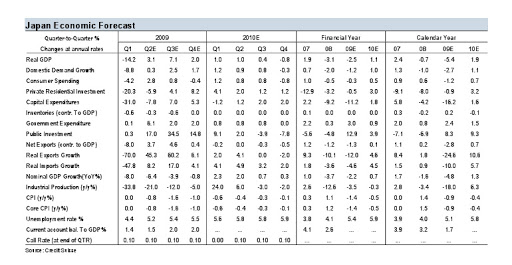


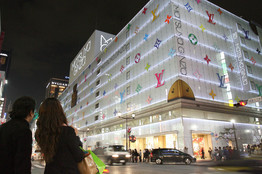

![[Japanese Cutbacks]](http://s.wsj.net/public/resources/images/MK-AT494A_JLUX_NS_20081216214815.gif)