To some, the fact that the wealthy are
once again putting their money in real estate is a sign the market is on its
way up
Whether it was the triple 8 that did it,
I&P's launch of 80 link houses on August 8 in Bandar Kinrara Puchong in
the Klang Valley was a sell-out - in three short hours. Of course, the
value-for-money proposition for its link houses proved irresistible to house
buyers, some of whom, according to reports, had started queuing on July 29,
more than 10 days earlier. Many jumped at the pricing for the units with
built-up areas of 2,151-2,551 sq ft. Priced at around RM460,000 (S$187,081)
- by some estimates a discount of nearly 20 per cent - house buyers
obviously thought it was too good a deal to miss.
Price revisions appear to have done the
trick for a number of developers in Klang Valley and Penang which have
recently seen good take-up rates for new and older launches. Inquiries have
picked up noticeably, property consultants say, with attractive financing
packages and discounts initially stemming the slide, but now providing some
momentum.
One developer launching service
apartments in the trendy area of Sri Hartamas next to Mont Kiara recently
advertised its terms: RM15,000 downpayment on signing, zero interest during
construction, no legal fees for the loan or agreement, and guaranteed
returns of 6 per cent for two years.
But all the incentives would mean little
if consumer sentiment had not improved. Locals and foreigners are more
upbeat, an analyst said, citing her Indonesian clients as an example. Flush
with earnings from commodities, a number are contemplating residential units
in Malaysia.
Going by the inquiries on Zerin
Properties' websites, the Mont Kiara area is popular with Singaporeans, its
chief executive Previndran Singhe said, while the Kuala Lumpur City Centre (KLCC)
area attracts more of a mixed bag.
The number of daily viewings in the KLCC
area has picked up, Terence Yap, the company's head of private wealth
confirmed, as has The Binjai On The Park. Located right smack in the KLCC
park, the development is considered a trophy asset and although some find
its design somewhat dated, few can knock its location.
Caught out by the global financial
crisis, the developer had cut prices in June which reduced the average cost
to RM2,400 per sq ft (psf) from about RM3,000 psf in August last year. Last
month, the developer clinched sales of over RM100 million and although its
cheapest units are upwards of RM3.75 million, interest remains encouraging.
To some, the fact that the wealthy are once again putting their money in
real estate is a sign the market has bottomed out and is on its way up.
Property players are quick to point to SP
Setia's Sky Residences and Eastern & Oriental's (E&O) St Mary's
Residences as examples. The first tower of Sky Residences was sold at an
average of RM680 psf in December; in July the second tower sold at
RM730-RM740 psf.
Similarly, St Mary's first block averaged
RM1,000 psf in June but its second block is now priced at about RM1,250 psf,
its premium owing to its more favourable views facing the KLCC.
E&O executive director Eric Chan says
the company has sold about 40 per cent of St Mary's Residences, describing
its soft launch of the first block in Singapore as 'very positive and in
line with expectations'. Buyers comprised mainly Singaporean professionals
and businessmen.
Admittedly, there have not been many
primary market launches. Most developers have gone back to the drawing board
to revise their original plans to cater to current market sentiments. Those
that have priced themselves too high will likely need to re-price their
products or put up with sluggish sales.
Ho Chin Soon of Ho Chin Soon Research
says that not all developers are positive, and that many are waiting for
year-end or next year to launch their projects. Two high- end developments
yet to see any significant progress in the KLCC area include Ong Beng Seng's
Four Seasons Place (hotel & service residences) and Kwek Leng Beng's
Millennium Residences. Property consultants expect the projects to only take
off next year. Mr Ho believes the sustainability of the property market will
hinge largely on the stockmarket performance given the correlation between
the two.
As always, location is crucial, but savvy
buyers are increasingly demanding differentiated products, good management
and after sales marketing to maintain their investments. For example, one of
the more pro-active developers, Bukit Kiara Properties, has plans to air
commercials in the cinemas on Verve Suites to promote the development, even
as it prepares to hand over the keys to buyers of its first tower block. Two
other places where the property buzz is stronger, according to real estate
players, are Penang and Kota Kinabalu.
Supply on Penang island being more
finite, prices have shown greater resilience - some claim they were hardly
dented during the financial crisis - and clean-up efforts by the new Pakatan
Rakyat state government have earned it some praise among Penang watchers.
Indeed, landed property on the island in
certain locations has seen robust demand. E&O's Mr Chan said a July
launch of 33 sea-fronting terraces at Seri Tanjung Pinang saw all snapped up
in three hours. The RM1.1 million tag was also a new record for an
intermediate terrace unit in the country. Moreover, 150 ballots were
received for the four direct sea-fronting units which went for RM1.52
million each.
CIMB Research believes Klang Valley
developers promoting new products that appeal to the locals, as well as
Kuala Lumpur and international buyers keen on Penang, are sustaining the
market.
Kota Kinabalu holds a different
attraction. 'KK is rocking,' Mr Singhe declared. The growing numbers of
Koreans and Japanese - particularly avid golfers - who flock to the East
Malaysian city during weekends for much cheaper rounds of golf have brought
a new vibrancy to the place. The rising number of budget flights into the
city has made it very accessible and Mr Singhe says more Koreans have been
investing in condominiums as a holiday home.
A bull on property, Hwang-DBS Vickers
recently told its clients: 'We have seen continued warm response for recent
launches in KL and Penang. Developers are now resuming launches (including
high-end) compared to their earlier focus on clearing inventories. Selling
prices may be raised soon and incentives gradually pulled back, resulting in
margin expansion. We expect continued positive news flow, ample liquidity
and under-investment in the sector to drive valuations higher.' -
2009 September 22 BUSINESS
TIMES
New megatower
Malaysia's capital Kuala Lumpur will see
a 65-storey Four Seasons building rise up alongside its iconic 88-storey
Petronas Twin Towers, according to a report.
The tower, which will include a
hotel, apartments and a shopping mall, will be completed by 2012 despite the
global economic crisis, developer Syed Yusof Syed Nasir told the New
Straits Times. The daily said the project, known as Four Seasons Place,
was being built by a firm controlled by Syed Nasir along with Malaysian
tycoon Ong Beng Seng and the Sultan of Selangor.
"We are committed to
the project even during the downturn," Syed Nasir said. The daily said
the 140 apartments in the project would be sold for about 2,500 ringgit (677
dollars) per square foot. The 452-metre (1,483-foot) Petronas Twin Towers
which were completed in 1998 were the world's tallest buildings until they
were upstaged by the 509-metre-high Taipei 101 in Taiwan's capital.
- 2009 March 13
KL luxury condo sector in for tough
times
Analyst sees severe drop
in rental yields from 5-7% now
A
deluge of supply combined with a
slump in demand could make 2009 'a year of reckoning' for Malaysia's luxury
condominium sector, an analyst report warns.
More than 5,000 high-end units are
expected to come onstream in the Klang Valley alone by the end of this year,
followed by a similar number in 2009. As a result, rental yields, which now
average 5-6 per cent gross in the Kuala Lumpur city area and about one
percentage point more in the Mont Kiara area, are expected to be severely
depressed by the end of next year.
Even without the spectre of an economic
slowdown and softer demand, the flood of condo units in the pipeline -
particularly in the Klang Valley and Penang - has the potential to drag
prices down, OSK property analyst Mervin Chow says in a report.
Luxury condos benefited from the last
property upswing, with prices generally doubling from 2006. In the KL city
centre, for example, prices have risen to more than RM1,400 per square foot,
from RM700 psf then. In the other popular area of Mont Kiara, average prices
have gone as high as RM900 psf, from RM450 psf.
Projects seen as most likely to be hit if
the axe falls are those launched in the past 12 months - at record prices.
Property consultants say that a slowdown
in launches and softer demand is to be expected, given fears of lower
economic growth of 3-plus per cent next year, down from 5-plus this year.
But not everyone sees a condo bubble
about to burst. 'The market will be down but we won't have a crash,' says
Zerin Properties chief executive Previndran Singhe. At worst, prices could
come off 10-20 per cent, according to him.
A commercial sale he helped close
recently was transacted at RM580-RM600 psf in the tech city of Cyberjaya -
an indication that prices are holding up so far, he says.
In his 30-plus page report, OSK's Mr Chow
sees one bright spot on the property scene. Mid to higher-end landed real
estate will be next in line for a price boom, he reckons.
In economic downturns since 2000,
higher-end landed property has shown resilience amid tough economic
conditions.
But first, the current pall over property
has to pass, says Mr Chow, who does not see a recovery until the second half
of 2009 at the earliest. Going by previous trends, he expects the next
up-cycle to kick in in early 2010, or 2011 if the downturn is worse than
expected.
Why - barring a recession - is higher-end
landed property a likely safer bet? Factors include a tendency for affluent
investors to hedge their wealth in prime real estate when there is a flight
to quality, and these investors having strong holding power, Mr Chow says.
Capital appreciation in Kuala Lumpur has
also been decent on average, plus incoming housing supply is 'still
manageable'. - 2008
November 7 BUSINESS
TIMES
KL property market turns soft
However, niche property and the upmarket segment
still attract serious investors
For the past five years or so, the Malaysian
property market has been in expansionary mode, riding on the back of a
pent-up demand for real estate. Cheap interest rates have been the main
driver of the housing boom but some analysts believe Malaysia's property
market is already looking overbuilt.
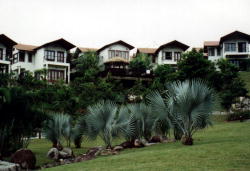

Marking time: Potential buyers are taking their time to look for
value for money
Banks have had a good time at the party, with
housing loans growing by 16-17 per cent over the boom period. But with
rising inflation - officially around 3.3 per cent although private
economists believe it to be more than 8 per cent in the Klang Valley - there
are reports of banks already seeing a rise in non-performing loans on
mortgages for houses valued between RM100,000 (S$45,000) and RM150,000, said
ABN Amro in a recent report.
'The lower-end households are feeling the squeeze,
as 34 per cent of their disposable income is already being used for
essentials like food, and so they are more likely to slip on mortgage
payments when the going gets tough,' it said.
Deutsche Bank is of the view that much of the
pent-up demand for housing has already been met, and that this is reflected
in the 18.5 per cent and 27.3 per cent year-on-year increase in volume and
value transacted in the residential property sector last year.
Most property players concede the real estate
market has turned softer. A director at an international property consultant
firm agreed the property market is looking less robust. Although the banking
system is flush with cash, he said Malaysians seem to be holding back on big
ticket items, not entirely confident the economy will deliver.
Regroup Associates executive chairman Christopher
Boyd said the residential market is only marking time. 'In the mid and lower
range, competition has increased and potential buyers are taking their time
to look for value for money.'
This is a watershed for the market, he said, as 10
years ago the Klang Valley had one house for seven people. By late last
year, the ratio was a more 'comfortable average' of one for five as the
provision of new housing reduced the backlog.
Niche property is, however, still holding its
ground. The upmarket segment of multi-million-dollar condominiums in the
Kuala Lumpur city centre - particularly in the surrounding locale of the
iconic KLCC twin towers - has had a good run. Although prices could be
peaking, the area still holds attraction for serious investors. Recently,
the United Arab Emirates' diversified Al Batha group made a major real
estate investment in the KL city centre vicinity, purchasing 13 luxury units
in Suria Stonor for around RM26 million, or an average of RM720 per sq ft.
Three years ago, property prices in the area averaged RM500 per sq ft.
Malaysian developers have begun looking to
oil-rich Middle East investors as potential buyers of high-end real estate
projects. Middle Eastern buyers have also caught on to the Kuala Lumpur real
estate scene, perceived as a bargain compared to other regional markets.
Besides capital appreciation, the current weak ringgit also offers potential
currency gains.
Much of the current interest in property is now in
real estate investment trusts (Reits), with a number involved in the
marketing of new Reits over the next six months, said Kumar Tharmalingam, a
director of Hall Chadwick Consulting.
Mr Tharmalingam said the secondary residential
market is weak, but the primary bread-and-butter market of the two-storey
terrace house is still attractive because developers have become more
innovative in providing lifestyle products which are not so sensitive to
price. In the middle market segment, house purchasers want niche
developments with a lifestyle concept and are prepared to consider them even
if they are located outside the city, he said.
Morgan Stanley believes the Malaysian housing
market is overdone, with housing stock up 70 per cent in five years and the
growing number of 'impaired properties' which could pose a burden for banks.
Malaysia has always suffered an over-built housing
market owing to the government policy of reserving 30 per cent of all
housing for bumiputras, observed Mr Tharmalingam. 'We also have housing by
state-government-linked developers building in out of the way locations
where transportation is a problem and hence the properties are not sold. New
green-field developers also anticipate movement of population into the
locations they are developing, but sometimes it doesn't happen.'
Mr Boyd does not think the market is overbuilt as
he believes Malaysia's sell-then-build system mitigates such tendencies.
'The long-term outlook is still good. Half the Klang Valley is 27 years old
or under, 20 per cent of the population is still at school, household
incomes are rising and employment is still virtually full.'
An interest rate hike could further dampen the
property market although it is likely to have been factored in already. The
central bank has kept its overnight policy rate at 2.7 per cent, 130 basis
points lower than US key rates of 4 per cent, and analysts expect the rate
gap to be narrowed by the first quarter of next year. In this regard, Reit
products that are coming onto the market could be hit should their yields
not be competitive enough. As a comparison, Axis Reit, Malaysia's first Reit,
promised yields of around 8 per cent when it was listed in July.
The coming 12 months should also see the launch of
two hotels within the KLCC Twin Towers area. The Four Seasons hotel by
Singaporean Ong Beng Seng, as well as the Hyatt Hotel, would further enhance
the location of the Twin Towers as the premier commercial centre in Kuala
Lumpur, said Mr Tharmalingam. Good condos in the area would continue to sell
well, Mr Boyd added, and smaller condos close to the city which can offer
some lifestyle frills would see renewed interest.
In the office market, however, he said supply is
tightening and should City Hall not reappraise its freeze on new office
buildings, a further flight of tenants to Petaling Jaya could be expected.
-
by Pauline Ng SINGAPORE BUSINESS TIMES
22 Nov 2005
NEWS STORIES:
Malaysia may renew a waiver on stamp duty, a tax
on home purchases, until the end of the year and offer incentives to
non-Malaysians to buy homes in a bid to spur the property industry, a
government official said.
The government waived the payments in the six
months to June 30.
Since then, home sales have fallen, and property
developers are asking the government to reinstate the waiver.
'Some good news might come out when the finance
minister announces the 2003 Budget,' M Kayveas, Malaysia's deputy minister
of housing and local government, said in a speech.
'Let us keep our fingers crossed.'
Malaysia is struggling to clear a backlog of more
than RM27 billion (S$12.5 billion) of unsold homes, offices and factories,
as of the first quarter, that has weighed on property developers such as
Land & General Bhd and clipped the ability of banks to lend more.
Efforts to clear the backlog of property
accumulated from a boom in the early 1990s hit a snag when economic growth
slowed to 0.4 per cent last year, the slowest pace since the 1998 recession.
The minister said a 'sober' property market should
keep home prices from rising until demand from buyers improves.
Malaysians bought only 41 per cent of new
residential units offered for sale in the first quarter, fewer than in the
previous quarter.
The government may also reduce 'certain taxes' in
the Budget due Sept 20 to help Malaysian home builders sell their property
to overseas buyers and to stimulate the economy, Mr Kayveas said.
'The government could assist by introducing
favourable policies.'
Stamp duty is charged at one per cent on the first
RM100,000 of the price paid for a home, 2 per cent between RM100,000 and
RM500,000 and 3 per cent above RM500,000. The government raised RM1.7
billion from stamp duty last year, which accounted for 2.7 per cent of total
tax revenue.
The Kuala Lumpur Property Index rose 4.84, or 0.8
per cent, to 611 at the close.
Shares of SP Setia, the fourth-largest property
developer on the Kuala Lumpur Stock Exchange, rose 6 sen to RM3.46. IOI
Properties Bhd rose 10 sen to RM6 at the close. -
Bloomberg 13 Sept 2002
SIngapore
Business Times
Faltering economies normally
weaken property markets, but in Kuala Lumpur, residential property is
holding reasonably steady in spite of declining economic-growth forecasts
for the year.
Particular hot spots are new terrace-house
developments aimed at the city's middle classes. Even some high-end
complexes not due for completion for several years are selling briskly. Take
the Mont'Kiara Damai development, just to the east of Kuala Lumpur's
business district. Its condominiums start at around $200,000 and won't be
finished until 2004, but buyers were registering for units even before they
were put on the market in early July.
"The commercial sector remains very weak and
I am worried about industrial properties further down the line, but the
residential sector hasn't been affected as much as we thought," says
Lim Eng Chong, Kuala Lumpur-based director of Henry Butcher, an
international asset consultant.
He attributes stronger-than-expected residential
sales to the remnants of Malaysia's capital controls, which mean most
Malaysians can't invest overseas. Low interest rates and an uncertain
outlook for the stockmarket make property look even more attractive.
Still, activity is selective, and focused on good
locations. "If anything, location is more important in hard times, so
good spots, good locations have gone back to their 1997 levels and some
areas like Bangsar have gone way past their 1997 levels," says Goh Tian
Sui, director of surveying and property consultancy CH Williams Talhar &
Wong. Bangsar has a concentration of upmarket bars and restaurants which are
popular with middle-class Malaysians and expatriates.
Further from the city centre, terrace-house
developments in established middle-income commuter suburbs like Bandar Utama
and Mutiara Damansara have also been selling well, as supply since the 1997
financial crisis has been limited. Projects in well-located new townships,
like Puchong, which is half-way between Kuala Lumpur and the new
administrative capital of Putrajaya, have also seen brisk sales. According
to a survey carried out by the Malaysian Institute of Economic Research,
some 58% of property developers saw a decline in unsold units in the second
quarter of 2001, though oversupply means prices are softer for mid-range
condos.
Rentals have also softened in the economic
downturn. "People are a lot more prepared to give discounts on the
market for rentals, whereas there are not many desperate sellers," says
T.P. Lim of JED Realty. This is not that surprising, as the Kuala Lumpur
rental market has a higher proportion of expatriates compared to the sales
market, and economic downturns generally affect expatriates first.
Nevertheless, locations like Mont'Kiara, which is the core residential area
for Japanese expatriates in Kuala Lumpur, have remained insulated from the
economic chill. And the buyers of condos in Mont'Kiara Damai are counting on
things staying that way until their properties are completed in 2004.
Malaysia has always been
obsessed with superlatives, whether it's the tallest flagpole or the highest
twin towers in the world. But its latest global first takes the biscuit--the
mother of all hotels, with a mind-boggling 6,300 rooms that will put
monsters like the MGM Grand in Las Vegas in the shade.
The hotel, called the First World, is the newest
addition to the Genting gambling and entertainment enclave in the highlands
north of Kuala Lumpur. Some 1,000 rooms have been open since December 15,
and when the entire complex is complete in around 2004, it will more than
double available accommodation at Genting's self-styled "City of
Entertainment" to around 10,000 rooms.
While Genting is well known in Asia, it has none
of the international market draw or brand recognition of Las Vegas. It has
the advantage of holding the only casino licence in Malaysia, but it is also
situated in a Muslim-majority country (Islamic teaching outlaws gambling),
and therefore cannot count on a large and dedicated domestic visitor base.
So filling those 12,600 extra beds (assuming two to a room) is not going to
be an easy task. "It's a little ambitious. We haven't seen anything of
this scale anywhere in Asia before," says David Ling, senior
vice-president of Jones Lang LaSalle Hotels in Singapore.
While the "mega-hotel" business model is
untested in this region, Genting--which topped the REVIEW's
2000 survey of best-managed companies in Malaysia--is in no doubt that the
market potential is there. Its confidence is based on the emergence of new
tourist bases, particularly in mainland China, where punters may not have a
fortune to spend but have plenty of compatriots. In consequence, the entire
First World Hotel is budget accommodation. The current rack rate for a twin
room is 50 ringgit ($13) and profits, when they come, will be based on
volume, not hefty profit margins.
The emphasis on volume is clear from the 32
check-in desks in the cavernous lobby, and the 1,338-seat coffee shop. Even
the bowling alley has 34 lanes, and work is under way to widen the winding
access road that brings visitors up to the resort, some 50 kilometres north
of Kuala Lumpur. "We have a nice large five-star lobby for the ambience
and then basic, clean rooms. In the current economic conditions this kind of
budget hotel fits in very well, as it's in reach of the medium-to-low income
group," says B.M. Wong, assistant vice-president of the First World
Hotel.
Gambling remains the bread and butter of the
Genting resort--besides the First World Hotel, there already is a slew of
luxury hotels and helicopter landing pads for the high-rollers--but its new
expansion into the budget market comes with a greater diversification into
other forms of entertainment. Like the MGM Grand and other major hotels in
Las Vegas, Genting is attempting to re-brand itself as a family destination,
and the First World development comes along with Southeast Asia's biggest
indoor theme park, an ice-skating rink and snow house, replete with toboggan
run.
"Genting has always maintained a recreation
centre as a secondary attraction to the gambling, but building so many more
rooms to bring more and more people up means you need good entertainment
that will make people stay longer than one day," says Michael Greenall,
head of sales at BNP Paribas Peregrine in Kuala Lumpur.
Even though the new theme park is still under
construction, the First World Hotel has been running at 84%-86% occupation
rates since its opening. With the prospect of another 2,300 rooms by the end
of 2001, hoteliers in Kuala Lumpur--especially those running two- and
three-star establishments--are looking nervously at the development.
The Malaysian capital suffers from significant
oversupply of hotel rooms and occupancy is wavering around a miserable 60%,
despite some of the lowest room rates in the region. If Genting manages to
capture most of the emerging Chinese tourism market and bus people direct to
the First World from Kuala Lumpur's airport, then there will be little
excess business for those establishments in the city.
But Lim Eng Chong, director of Henry, Butcher, Lim
& Long, a Malaysia-based property consultancy says there will not be
significant fallout in the Kuala Lumpur hotel market. "Kuala Lumpur and
Genting are two very different places and they attract very different
people. Genting is a very special market and it could well be in Timbuktu
for the amount of influence it has on Kuala Lumpur."
Eddie Chen has a most unenviable mission--to drum
up international buyers for Malaysia's oversupplied real-estate market. As
president of the Real Estate and Housing Developers' Association Malaysia,
he is organizing a regional roadshow to highlight his government's recent
abolition of many restrictions on property purchases by foreigners, and to
encourage new buyers.
The roadshow is planned
for Singapore, Brunei, Indonesia and probably Hong Kong. However, don't
expect a stampede into the market. Malaysia relaxed its purchasing policies
at the end of April to chip away at the glut of unsold apartments, offices
and retail space collectively valued at 10% of GDP at the end of 2000. But
even with the accompanying list of sweeteners, which includes local
mortgages for foreigners and an end to enforced Malay equity in valuable
projects, significant risks remain for foreign investors.
First and foremost, fears that Malaysia might be
forced to devalue its currency are still bright on the radar screen. Second,
Kuala Lumpur's past policy flip-flops on property purchases by foreigners,
including a retroactive 100,000 ringgit ($26,315) sales tax introduced
temporarily in 1995, make many nervous that the same could happen again. And
then there is the fact that property in Malaysia is still a lot more
expensive than in neighbouring Thailand and Indonesia, and the chance of
fire-sale prices is remote.
"The government is now very keen to be
receptive to foreign purchasers," says Chen. "In the past, with
all their policy changes and so on, they gave the impression of not being
very keen, but that has changed." The reason for the change is that
Malaysia, with its export-driven economy, is feeling the pinch from the
economic downturn in the United States. It needs foreign capital. Property
sales are one way to achieve this--especially when the value of the
country's property overhang was close to 30 billion ringgit at the end of
last year.
Under the new relaxation, the government's Foreign
Investment Committee no longer has to give approval for deals worth less
than 20 million ringgit. Previously, approval was required, and the lengthy
6-8 week process put off many potential buyers.
ONCE BITTEN, TWICE SHY
Standard conditions attached to such FIC approvals
nearly always included a requirement that the purchaser set up a locally
incorporated company with 30% Malay equity ownership. Now, any property
purchases above a minimum of 250,000 ringgit and below 20 million ringgit
are unfettered, and this includes residential, office and manufacturing
space. The changes also loosen restrictions on sales involving Malaysian
nationals who are not ethnic Malays.
Along with a separate initiative to waive stamp
duty for property bought directly from developers, the measures should bring
new property sales this year to around 4 billion ringgit, according to
Deputy Finance Minister Chan Kong Choy.
However, the Kuala Lumpur stockmarket was less
than impressed with the incentives. Its property index fell by nearly 2%
when the measures were announced. Analysts say that foreigners make up less
than 2% of the property market and that attracting more investors will be an
uphill battle, given uncertainty about the ringgit's peg. Many
Singaporeans--once the most enthusiastic investors in Malaysia--had their
fingers burned during the policy changes of the mid-1990s, and are not
likely to be lured back easily.
In addition, Malaysia's bad loans agency,
Danaharta, has not followed the "short, sharp shock" approach to
debt recovery and is trying to maintain the value of the property market
while slowly addressing the debts incurred during the Asian financial
crisis. That creates a stagnant market.
"There really are no bargains here. Prices
have stayed up high because no one is being forced to sell, and that means
there has just been a dearth of transactions," says an analyst with a
foreign bank.
But for Eddy Chen, the main issue is one of
long-term credibility. "From what I gather from my discussions with
government officials, we've learnt our lesson. It's best to keep policies
constant and transparent. Then we can project to foreign purchasers that
these policies are here to stay," he says.
Rusty cranes and half-built office blocks still
dominate much of Kuala Lumpur's skyline, and are a sobering reminder of the
crippling effects of the Asian financial crisis. Three years on, the owners
of A-grade buildings still have trouble finding tenants, and the central
bank estimates that another four years will be needed to clear the glut.
But all this hasn't prevented a flurry of
construction work on a 72-acre (28.8-hectare) "city-within-a-city"
redevelopment project in central Kuala Lumpur. While the shells of other
buildings deteriorate and scores of other projects have been kicked back to
the drawing board, Kuala Lumpur Sentral is rising, in spite of a series of
crisis-induced delays, on the site of an old railway marshalling yard.
Phase one, which is due for completion in 2004,
involves 11 million square feet of office, condominium and retail space.
Interest in the project is such that both Le Meridien and Hilton have
already signed up to manage the four- and five-star hotels on the site.
According to the developer, Malaysian Resources Corp. Bhd., about 80% of the
units in the first apartment block, Suasana Sentral, have been sold, while
three-quarters of the space in the first of the office towers, Plaza Central
1A, also has been taken up.
The reason for this bubble of optimism around KL
Sentral is simple--the project is built around a new transport hub for
Malaysia that will involve national and city rail links. The focus of the
project is KL Sentral Station, which Malaysian Resources built for nothing,
in return for development rights to the rest of the site. The station opened
to passengers in mid-March, and an express rail link to the airport will
open next year. When that happens, KL Sentral will also have a city
check-in, like the one in Hong Kong, and is hoping to attract significant
numbers of international travellers.
"As the main transportation hub for Malaysia,
KL Sentral is going to be very convenient, so it has more to offer than
other developments," says Malathi Thevendran, executive director of
research and consultancy at Jones Lang Wootton in Kuala Lumpur. She has been
involved in consultancy for the giant project and says the major outstanding
issue is creating a comprehensive management and marketing team for the 5
billion ringgit ($1.3 billion) development.
"Most of the marketing is still done ad hoc
and in-house. They still need to get everything sorted out, but now that the
station is open, interest is rising and we expect the project to kick in at
the end of this year or the beginning of next year," she says. That's a
view echoed by local brokerage house OSK Research, which upgraded its
assessment of Malaysian Resources in early March because of the KL Sentral
project. It said the project was bucking bearish trends in the construction
sector and its location would enable it to command a premium over other
developments.
However, most foreign brokerage firms in Kuala
Lumpur point to the delays already experienced at KL Sentral--the railway
station and express rail link, for example, were initially scheduled to open
in 1998--and competition with existing prime sites, like the 100-acre Kuala
Lumpur City Centre development that incorporates the Petronas Twin Towers.
Mohaini Mohd Yusof, corporate communications
director at Malaysian Resources, discounts these fears, saying KL Sentral
will complement, not compete with, Kuala Lumpur City Centre as the two have
different roles in the city's property market. Restrictions imposed on
foreign property purchasers are expected to be relaxed later this year--a
move aimed at clearing the property glut--which is expected to work in KL
Sentral's favour. "Foreigners are most likely to be attracted by rental
yield and in this respect, high-rise condominiums, well-located prime landed
properties and office buildings are the likely choices," says Kuala
Lumpur-based investment Web site Surf88.
In March, Malaysian Resources, which is well
connected with Malaysia's political establishment, also secured new
financing for the next 10 years, through a 920 million ringgit issuance of
Islamic bonds. That should tide it through toward the end of the project,
which is scheduled for completion around 2012.
Meanwhile, the first tenants should be moving into
the complex in June, when temporary certificates of fitness are expected to
be issued for the first three completed towers. Malaysian Resources hopes
that 250,000 people will be living and working in KL Sentral by 2010.
- Far East Economic Review


