|

Perfume Academy
At L'Olfattorio, patrons sniff 'cups' of
fragrances, occasionally refreshing their noses with coffee beans. 'We're trying
to create a culture of appreciating perfume'
ROME - It's past 5 p.m., and the sky is
darkening. Rush-hour traffic is clogging the streets while the bars and cafés
are posting their menus for "il happy hour." Inside L'Olfattorio,
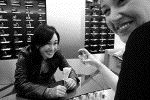
Stefania Zuccotti stands behind a curving bar, wearing a waiter's apron with a
full bib. Little pools of halogen light illuminate the room with a soft, warm
glow. While the after-work crowd make their way inside and take their seats at
the bar, Zuccotti begins preparing some sweet-smelling cups.
"This one is called Tea for Two,"
says Zuccotti as she sprays some perfume on a cardboard cup, then attaches it to
a clear plastic stem -- the whole thing resembling a wine glass. It smells warm
and something like spiced tea. "Its top note is a smoky tea, and the middle
notes are honey, vanilla and spice," she says. "The perfume tells a
story that is nice to listen to, and you choose what story you want to wear.
This one is about two people sitting beside a fire with a cup of spiced
tea."
The patrons sniff their cups, then switch and
try other people's cups. After sniffing three or four fragrances, people begin
rubbing their noses with irritation. Zuccotti reaches for a small jar full of
coffee beans and waves it under each person's nose. "This is to clean the
nose," she explains. "When your nose is full of too many smells, you
smell the coffee and then you are ready to start again." The strong,
pleasing smell of the coffee seems to work, and everyone is ready to get back to
sniffing.
Despite its appearance as a cocktail bar,
L'Olfattorio is strictly a perfume bar. People -- mostly women, though there
have been a few men -- stop in to sit on the bar stools across from Zuccotti and
listen to her tell tales about the perfume houses of France and Switzerland. The
customers love the fact that she appears to have all the time in the world for
them. If they like, she will spend all evening talking about perfume and trying
different scents. She will even give makeup lessons in the back of the bar. And
she won't accept any money, not even as a tip.
A neatly dressed woman in a black coat, with
a silver scarf that matches her black hair and silver streaks, has been amusing
herself by the side wall where the perfumes are displayed according to scent:
The florals are in one place, the musks in another. She has become fond of a
light citrus fragrance and holds out a test sample to Zuccotti while digging
into her purse for her wallet.
"Oh, no. We don't sell perfume,"
says Zuccotti to her astonished customer. In fact, the sign does say in tiny
letters that this is a fragrance bar and school and that admission is free.
Zuccotti goes behind the bar and pulls out a card that lists 28 shops around
Rome that carry the perfumes.
"It's strange for the Italian people to
see some kind person showing them something interesting and not wanting money
from them," says Zuccotti. "They are always so surprised. But we are
trying to create a culture of appreciating perfume, not a culture of selling
it."
The bar is actually owned by Cithera, a
company that imports artisanal perfumes from small perfume houses and sells them
to retail shops. It is an indirect sales approach, but the company is hoping to
get your money eventually by increasing the demand for the perfumes in Italian
shops.
Every evening -- except Sunday and Monday,
when it is closed -- people crowd into the bar and keep Zuccotti busy answering
questions and trying new scents. You don't have to worry about spending too much
money or taking up her time and not buying anything, since she will never know
whether or not you go on to actually purchase the perfumes.
Although L'Olfattorio represents some
specific brands of perfume, room scent and bath products -- Rubis from
Switzerland, Les Parfums de Rosine from Paris and Marseille from Provence --
they are grouped by fragrance type, the labels hidden behind the display tray,
to discourage choosing a scent based on the brand. Most perfume shops in Italy
are organized by brand name -- the Guerlain products on one shelf, the Chanel on
another. But the display at L'Olfattorio fits nicely with the new Italian
sensibility of not flaunting name brands.
"That vulgar Fendi logo on the handbag
or the horrid Versace belt -- you are wearing all of those company names all
over your body, and it is such bad taste. People are wanting to go back to
buying things they like," says one L'Olfattorio patron on her way out the
door with a list of pleasing scents. "I like this idea very much. You have
to use your own taste, you think about it before you buy it."
Since you have to think about it during the
trip between the fragrance bar and the shop where you can buy the perfume, it
helps cut down on impulse buying as well.
"Many people like this because they can
drop by and take the time to learn about the scents they like," says
Zuccotti. "Normally, you can't do that in a regular shop -- it's too busy
and they don't have the time to spend with you. Here it is quiet and you can sit
down and take your time. No one is in a hurry."
She calls out a greeting from behind the bar
to a newcomer standing uncertainly in the doorway. It's hard to tell whether
she's hoping for a drink or would like to buy some perfume. "Take a seat
here," says Zuccotti to her confused guest. "What kinds of things do
you like to smell? I'll make you a nice cup."
- Jeannie Marshall
National Post 28 Nov 2002

|